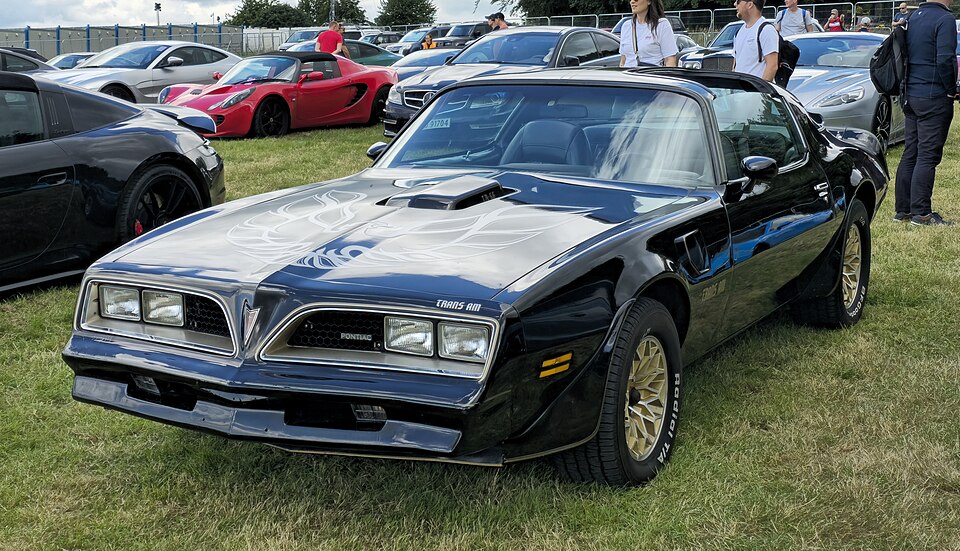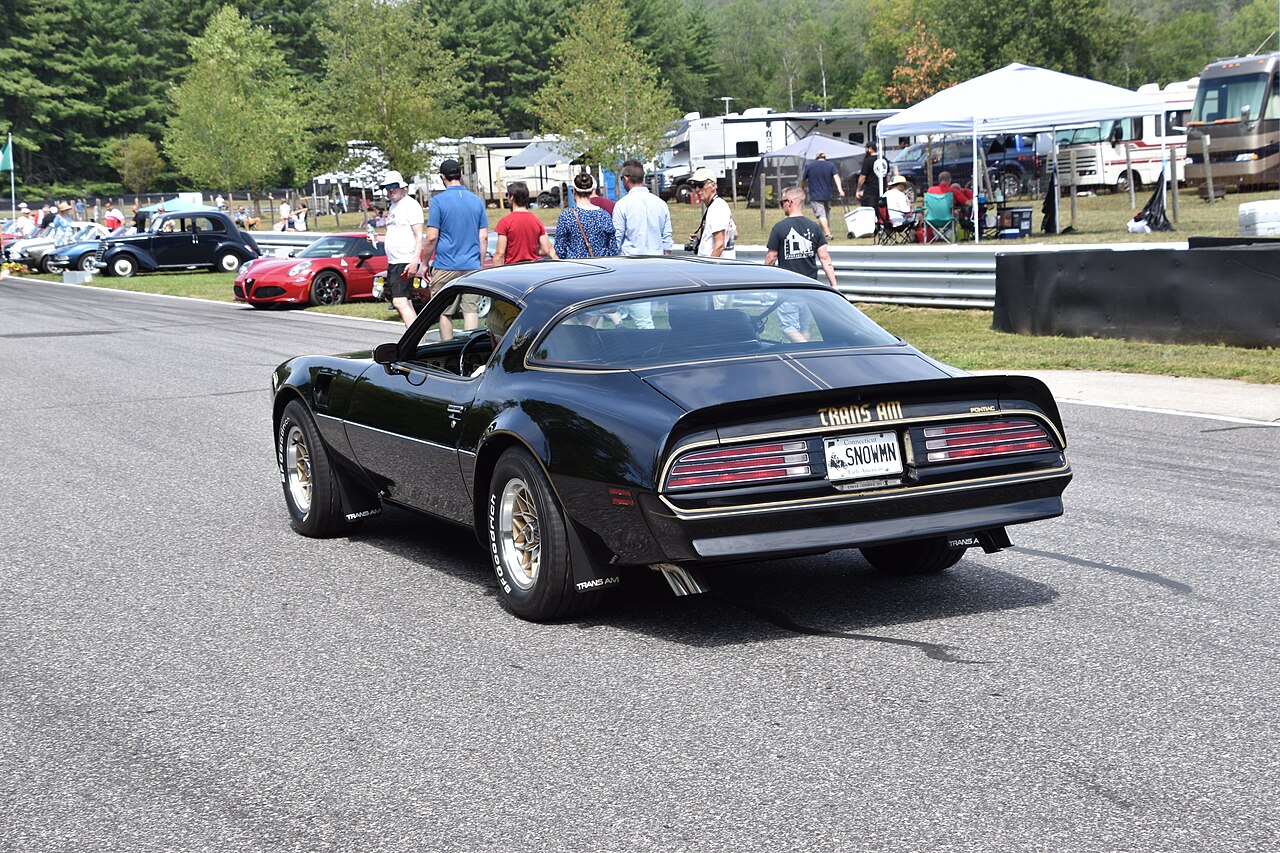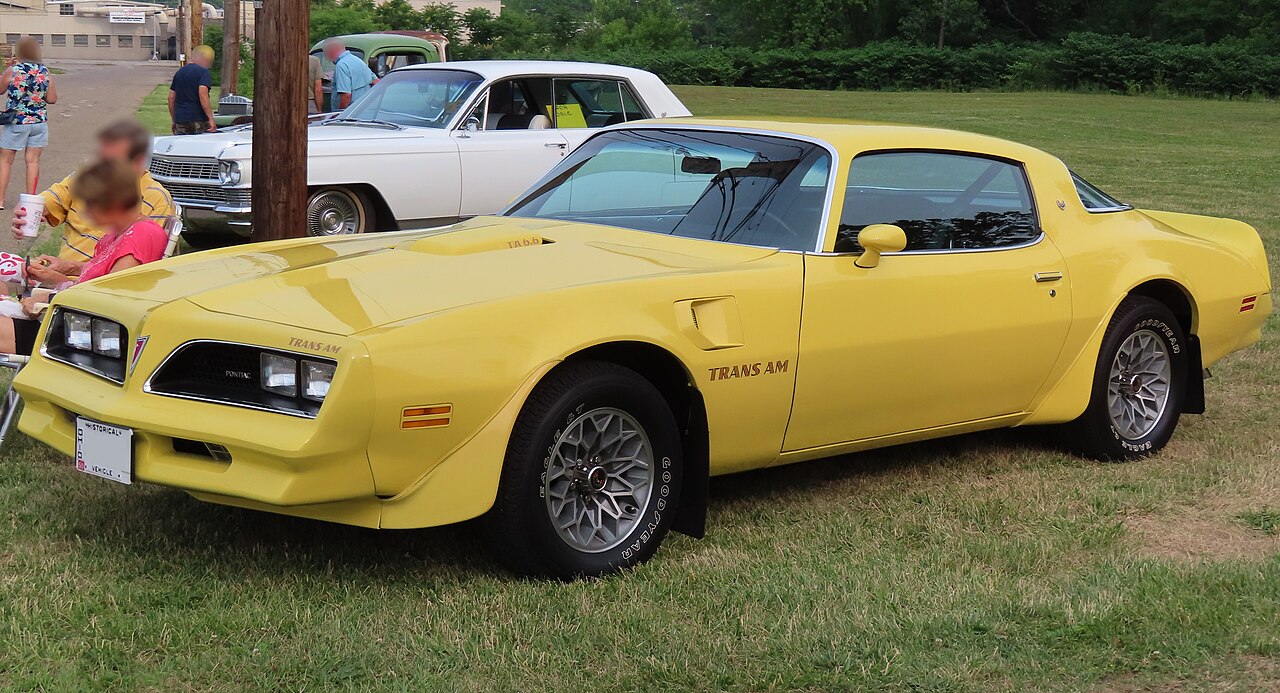
The 1977 Trans Am black and gold is one of the most recognized muscle car color combinations in American automotive history. Before Smokey and the Bandit arrived in theaters on May 27, 1977, black Trans Ams with gold accents were already rolling off dealership lots. The film made the combination legendary overnight, and understanding the difference between a standard factory 1977 black and gold Trans Am and the actual film cars is essential for anyone buying, restoring, or just researching these machines.
What Pontiac Actually Offered in 1977
The 1977 Pontiac Trans Am came with a set of standard visual features that made black an especially effective exterior choice. The large Firebird hood decal, available in gold, covered most of the hood surface and became the car's signature visual element. Gold pinstriping ran along the body sides. Buyers could add T-tops for an additional charge, giving the car the silhouette that became iconic through the film.
Black (color code 19) was a standard exterior color available to any buyer at any Pontiac dealership. Pair it with the gold Firebird decal and body striping that came as part of the Trans Am appearance content, and the result was visually identical to what audiences saw on screen. That is exactly why the production team chose it.
The Trans Am package included specific content over the base Firebird: a functional shaker hood scoop, front and rear spoilers, specific Rally II wheels, and access to the performance drivetrain options. The interior on a 1977 Trans Am was trimmed in vinyl bucket seats. Black interior was the natural pairing for a black exterior car, though Pontiac offered several interior color choices and buyers could specify from the available chart.
Engine options centered on the 400 cubic inch V8. The standard 400 produced 180 horsepower (SAE net). Buyers wanting the top performance configuration could specify the W72 option, badged as the "T/A 6.6." The W72 brought output to 200 horsepower through revised cylinder heads, a more aggressive camshaft, and a higher-flow carburetor. The shaker scoop wore a "T/A 6.6" callout badge that made the engine choice visible at a glance. California-emissions requirements applied separately, as Pontiac's 400 was not California-certified for 1977.
The Smokey and the Bandit Film Cars: Not Your Dealer's Trans Am
This is where many enthusiasts get the story wrong. The 1977 Trans Ams used in Smokey and the Bandit were not pulled from dealer inventory and handed to Burt Reynolds. Universal Pictures worked directly with Pontiac to obtain multiple cars specifically for production use. Those cars were then prepared for filming, which included modifications beyond standard production spec and preparation for stunt sequences that would have destroyed a concours-quality example in short order.
Multiple cars were used during filming, and they were not all identical. Film vehicle researchers at the Internet Movie Cars Database have documented the various cars used across production, with stunt cars absorbing the majority of the rough work and cleaner "hero" cars appearing in close-up and dialogue sequences. Some cars were modified more heavily than others depending on their role.
The practical result for today's collector: a standard production 1977 Trans Am finished in black with gold accents is a genuine factory car with legitimate collectible value on its own. It is similar in appearance to the Bandit cars. It is not a Bandit car. Any seller claiming their car appeared in the film needs to produce documentation that can be independently verified, and even then, the provenance research on surviving Bandit cars is a specialized field with a lot of noise in it.
Demand for black Trans Ams climbed sharply after the film's release. Smokey and the Bandit grossed more than $125 million at the domestic box office, making it one of the highest-earning films of 1977, and Pontiac dealers felt the effect within months. Black Trans Ams became difficult to find on lots through late 1977 and into the following model year.
How Pontiac Responded: The Y84 Special Edition Package
Pontiac recognized what the film had done for Trans Am demand and responded formally. Beginning with the 1978 model year, the Y84 Special Edition package consolidated the black and gold combination into a single-order option code. The Y84 brought a specific black exterior, gold accent striping, color-matched Snowflake aluminum wheels, and a coordinated interior package that tied the whole look together. Buyers could order the entire configuration from a single line on the order form rather than selecting individual options.
The Y84 package continued through the 1981 model year. Collectors looking for factory-documented black and gold Trans Ams often target 1978 through 1981 cars specifically because the Y84 code appears on the broadcast sheet and trim tag, leaving no question about how the car left the factory.
For 1977, no equivalent single-code package existed. A black and gold 1977 Trans Am means a buyer selected a black exterior and the gold accent content as individual options. Both choices are recorded on the broadcast sheet, and that document is the most important paper a 1977 Trans Am can carry.
Authenticating a 1977 Black and Gold Trans Am
The broadcast sheet is the factory-printed production document that traveled with the car through the Norwood or Van Nuys assembly process. It lists every RPO code the car was built with, including exterior color, interior trim, engine, transmission, and individual options. Many 1977 Trans Ams still have their broadcast sheets tucked under the rear seat cushion or stuffed in the door jambs, placed there during final assembly.
Beyond the broadcast sheet, the cowl tag (also called the Fisher body plate) provides a condensed summary of the car's build data, including paint code and interior code. A legitimate 1977 black Trans Am will show color code 19 on that tag.
Physical verification should confirm several things. The VIN identifies the model, engine, and assembly plant and should match documentation exactly. The partial VIN stamped on the engine block should correspond to the car's full VIN. Component date codes on the carburetor, alternator, and distributor should predate or closely align with the car's assembly date. Mismatched date codes do not always indicate fraud, but they do require an explanation.
A car wearing black and gold paint without supporting documentation is a painted car. It may still be an appealing example, but its history and value are not the same as a matching-numbers, documented car.