Most guides to buying seat covers tell you to check the color and the year and stop there. This trans am seat covers buying guide covers what actually decides whether a set holds up on a 1978-1981 Trans Am or Firebird: fit at the bolster, the foam underneath it, and whether the hog ring pattern matches your frame. It comes from the bench, not a sales page, because the failure points on a bad set of covers are the same three I see come through the shop every month.
The Bolster Junction Is Where Cheap Covers Show Their Hand
The hardest part of any bucket seat pattern to get right is the seam where the bolster rolls into the seat back and cushion. That junction carries a tight curve, and the panel has to be cut and eased into it precisely or the seam sits proud, puckers, or pulls tight across the roll.
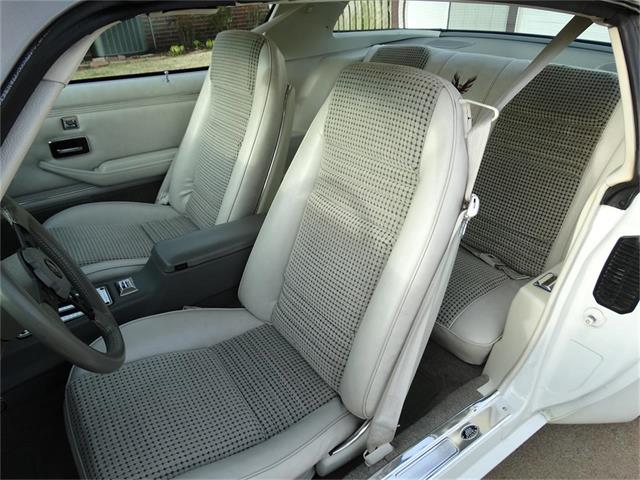
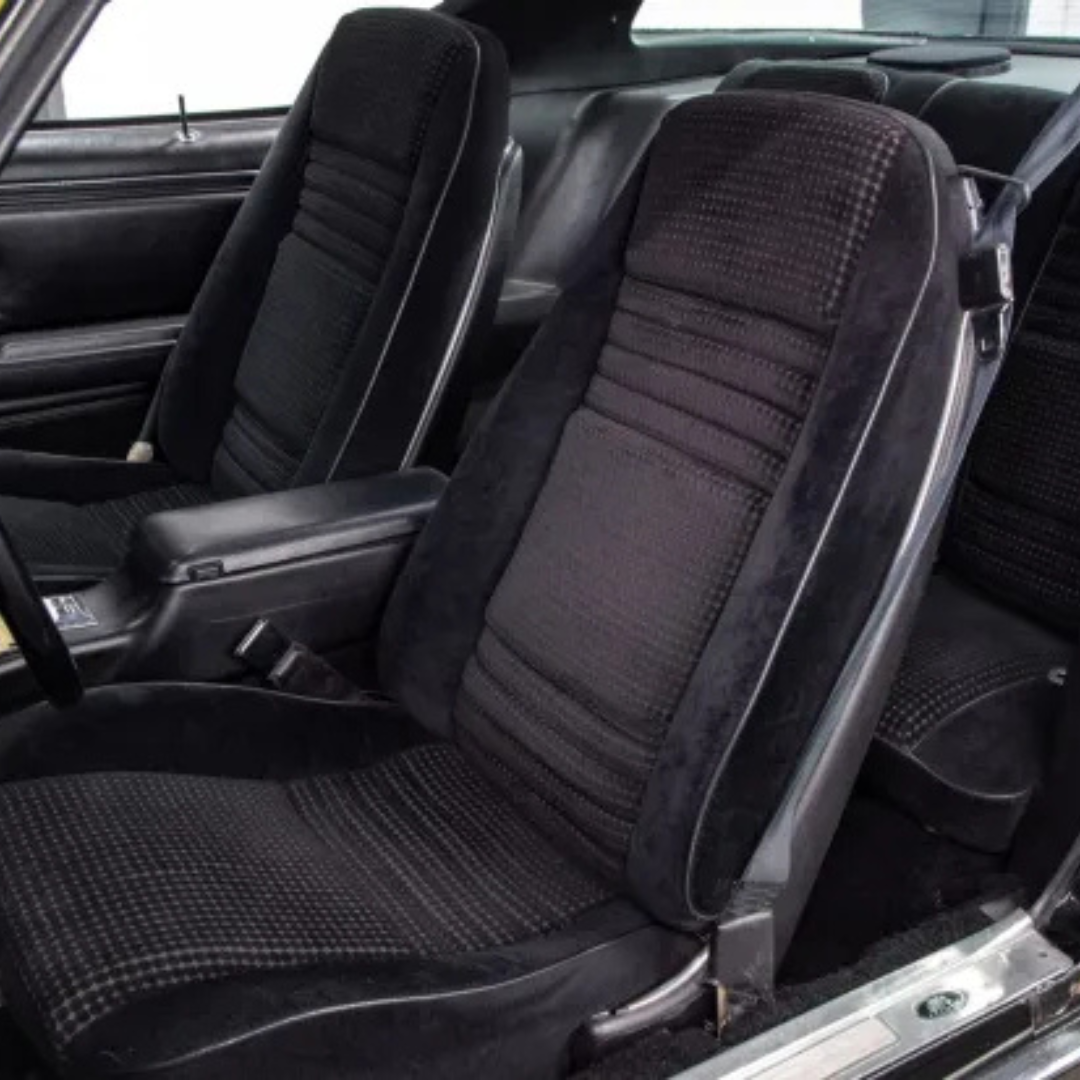
A generic cover built to fit "1978-1981 Firebird and Trans Am" as a blanket range is usually cut to one average bolster radius. That works passably on one interior level and looks wrong on the other, because the Deluxe interior's bolster has a tighter, more sculpted roll than the plainer Standard bucket. Cut a cover to the Standard's shallower curve and it will bunch on a Deluxe seat. Cut it to the Deluxe curve and it will sit loose and baggy on a Standard frame. The listing photo, shot on whichever seat the supplier had on hand, will not tell you which one you are getting.
Foam Interaction: The Cover Is Cut for a Specific Loft
Every seat cover pattern assumes a foam thickness underneath it. That assumption is baked into the panel dimensions and the amount of ease sewn into each seam. Put the cover over foam that does not match that assumption and the mismatch shows up immediately, not after a season of use.
Original foam in a 1978-1981 seat is almost always collapsed after this many decades, and a pattern cut for foam at full loft will wrinkle and sit low over foam that has settled. Some suppliers compensate by cutting extra ease into the pattern so an average worn seat still looks acceptable, which means the same cover goes baggy and loose the moment you install it over correctly replaced, full-loft foam. If a supplier does not ask whether you are replacing the foam at the same time as the cover, they are cutting to one assumption and hoping it works for whichever foam condition you happen to have.
The Hog Ring Pattern Has to Match Your Frame's Channels
The underside of a properly built cover has hog ring loops and listing wire sewn in at specific points, positioned to land on the same channels and spring grid wires that your seat frame actually has. That spacing is not arbitrary. It is what holds the cover down tight against the foam at the points that take the most flex, mainly the seat back to cushion junction and the outer edge of each bolster.
A generic cover sometimes ships with fewer loops, spaced to a rough average rather than to the 1978-1981 frame's actual ring pattern. When that happens during install, you end up either skipping rings the frame has no matching point for, which leaves the cover unsupported and prone to shifting and premature wear at that spot, or improvising extra rings through material that was never reinforced there, which is the fastest way to tear a brand-new cover within a season.
What a Frame-Specific Cover Actually Gets You
A cover drafted from the actual 1978-1981 front and rear frame, rather than a generic bucket shape, solves all three problems at the source. The pattern is drawn off the frame itself, so the bolster curve, the panel dimensions, and the hog ring points are correct for that specific seat, not an average of several years' worth of seats.
That specificity matters because the 1978-1981 seat is not interchangeable with earlier cars. The pattern used from 1973 through 1977, the shape enthusiasts call the horse collar seat, was replaced for 1978 with a more angular design, and the two are not the same part even though the model years look similar from outside the car. A pattern built correctly for 1978-1981 will not fit a 1977 seat, and a 1977 pattern will not fit a 1978. It also needs to know which Standard or Deluxe interior your car has, since the two use different pleating and seam placement. If you are still identifying your trim code and interior level, our 1978-1981 seat covers buyer's guide walks through how to pull that information off the data plate before you order anything.
Done right, a frame-specific cover drops onto the original front and rear frames without modification. No extra holes punched in the material on install day, no ring points improvised, no bolster seam fighting the curve it was supposed to follow.
Material and Stitching: What Actually Moves the Needle
Vinyl or leather. Every 1978-1981 Trans Am and Firebird left the factory in vinyl. The single exception across the whole run is the 1979 10th Anniversary Trans Am, option code Y89, which came with silver leather-trimmed seats to match its Platinum Silver Metallic paint. If you are restoring anything else to factory correct, vinyl is the answer. Leather on any other 1978-1981 car is a legitimate upgrade, not a factory-style choice, and full-grain leather holds up to years of getting in and out of the car in a way that bonded or coated material does not.
Stitching type. French stitching, a flat, lapped seam rather than a simple straight lockstitch, lays flatter across a pleat and holds its line better at the bolster, which is exactly where a seam gets the most flex from daily use. A straight seam can work fine on a flat panel and still pucker the moment it crosses a curve.
Thread. UV-stable, solution-dyed thread resists fading and does not go brittle the way generic thread can after a few summers under a T-top roof. Thread failure is a common, underrated cause of seams opening on covers that are otherwise in good shape.
Foam density. A cover's designed tension only holds up over foam at the density and loft the pattern was built for. Pairing new covers with correctly specified replacement foam is not optional if you want the finished seat to sit right.
Questions to Ask Before You Order
- Is this pattern cut specifically for the 1978-1981 frame, or is it listed as fitting a wider, unspecified range of years?
- Does the cover account for Standard versus Deluxe, and which one is this one built for?
- What foam loft is this pattern built around, and should I replace my foam at the same time?
- How is the cover secured to the frame, hog rings, listing wire, or something else, and does that match what my frame actually has?
- What is the stitching, and is the thread rated for UV exposure?
- Can you show a finished set installed on an actual frame, not just fabric or leather swatches?
- What is the lead time, and does it change if I want a color or material outside your standard options?
A supplier who answers all seven without hesitation has clearly built these before. One who cannot tell you the foam assumption or the hog ring layout is selling a generic product with your year printed on the listing.