The question of what happened to the original Bandit Trans Am surfaces every time a black-and-gold 1977 Pontiac rolls across an auction block with a famous name attached to it. The honest answer is that the premise of a single surviving hero car is itself the problem. Smokey and the Bandit used more than one specially prepared 1977 Trans Am during production, and that fact complicates every provenance claim attached to these vehicles today. Understanding where the cars ended up requires understanding how they were built and used in the first place.
The Cars Pontiac Prepared for Production
Universal Pictures coordinated with Pontiac to supply vehicles for the 1977 production, and the studio received multiple specially prepared 1977 Trans Ams. These were not cars pulled from dealer inventory and handed to the crew on location in Georgia. The production required two distinct categories of vehicles: hero cars used for principal photography, dialogue scenes, and close-up work featuring Burt Reynolds and Sally Field, and stunt cars built to absorb the punishment of chase sequences, hard driving, and jumps. That division matters because hero cars and stunt cars were prepared differently, treated differently on set, and not assigned the same fate when production wrapped.
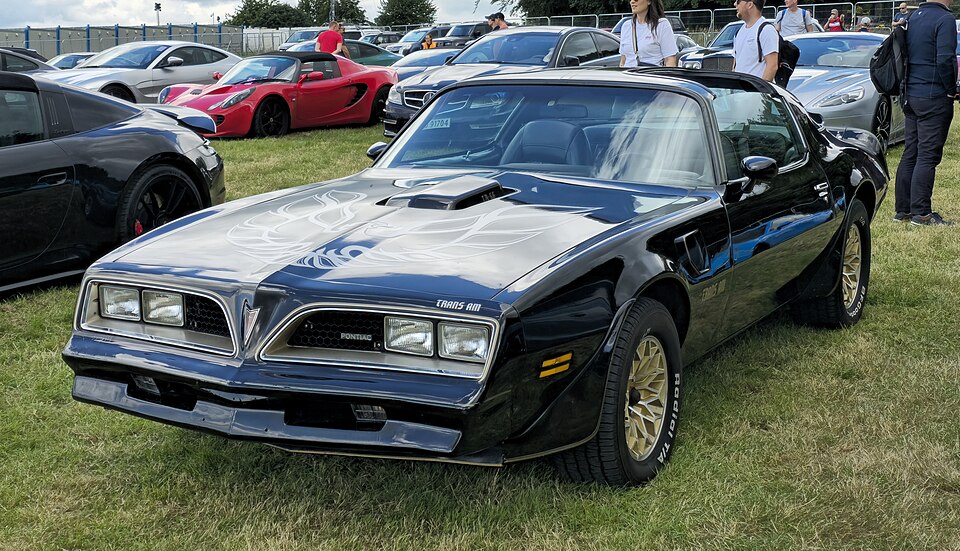
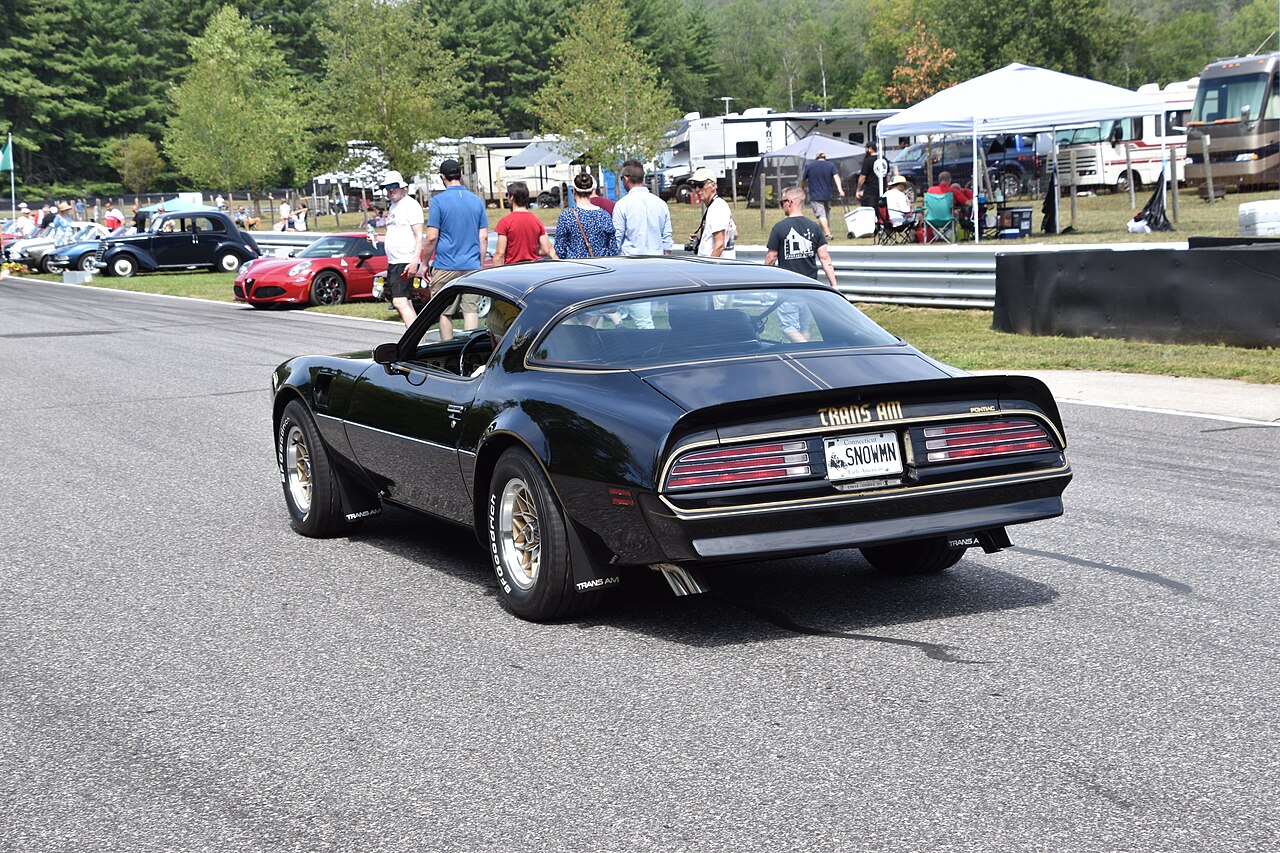
The 1977 Trans Am ran Pontiac's 400 cubic inch V8 in standard configuration, and the production cars wore the factory black exterior with gold striping and the Screaming Chicken hood decal, matching what any buyer could have ordered through a Pontiac dealer that year. The mechanical and structural preparation for film use was where these cars diverged from showroom stock, along with the paper trail, or lack of one, that followed each vehicle after filming concluded.
One clarification before going further: a standard 1977 Trans Am and a film-prepared production car look nearly identical in photographs. A showroom 1977 Trans Am in black and gold is not a Bandit car by virtue of its color. The production vehicles were purpose-built for filming and are a separate category entirely.
Where the Film Cars Ended Up
Some cars did not survive the production. The stunt vehicles used in the film's jump and collision sequences were heavily damaged or destroyed during filming. This was standard practice for 1970s film production. The cars were working tools, not future collectibles, and the people handling them in 1976 had no reason to treat damaged stunt hardware as something worth preserving. Multiple crew accounts confirm that at least several vehicles were rendered unusable before the cameras ever stopped rolling.
The hero cars tell a different story. At least some of the vehicles used for principal photography survived after the film wrapped in 1976 and premiered in May 1977. As Smokey and the Bandit became one of the highest-grossing releases of that year, the surviving cars took on a value that no one anticipated when they were first prepared for the shoot.
Burt Reynolds maintained a documented personal connection to the Trans Am for the rest of his life, discussing it publicly in numerous interviews. He is credibly reported to have retained at least one car associated with the production in his personal collection. Reynolds died in September 2018, and items from his estate moved through auction in the following years, including Trans Am-related vehicles and memorabilia. The documentation attached to those lots varied, and not every Reynolds estate item came with an airtight chain of custody.
Other surviving film cars entered private collections in the years after production. Some have appeared at major events run by Barrett-Jackson and Mecum with seller representations of film provenance. The challenge in each case is the same: documentation. Production companies in the 1970s did not systematically record vehicle identification numbers, retain titles, or create written chain-of-custody records. That gap in the historical record is what makes every provenance argument difficult to close.
Why Pinning Down "the Original" Is So Difficult
The problem with any claimed original Bandit car starts and ends with paperwork. No publicly available registry documents every VIN used in the production, which car served as which hero car on which shooting day, and where each vehicle went after Universal was done with it. That absence of records has allowed multiple cars to circulate with plausible-sounding but unverifiable histories.
Some legitimate film cars have survived with partial documentation, including letters from the studio or a production company, period photographs showing a specific car on set, or testimony from crew members. Partial documentation is not the same as a complete authenticated title history, and the collector car market prices those two things very differently. A car with a studio letter and some set photographs is more credible than a car with nothing, but it is still a long way from fully proven.
The situation is further complicated by how many 1977 Trans Ams were ordered in the same configuration. Black exterior with gold striping and the Screaming Chicken hood decal was a standard factory combination that a significant number of buyers chose that model year. Separating a genuine surviving film car from a very similar production vehicle requires more than a matching paint code and a good story.
The Y84 Package and Why People Confuse It with the Film Cars
Pontiac released the Y84 Special Edition package beginning with the 1978 model year, partly in response to the film's commercial success. The Y84 brought a black exterior with gold striping and a specific interior combination, and it was sold through 1981. It is sometimes called the Bandit package in casual conversation. It is not the same as a film-prepared 1977 Trans Am, and a Y84 car carries no film provenance regardless of how closely it resembles the production vehicles. The two have completely different origins and are valued on different terms in the market.
What Surviving Film Cars Command at Auction
Cars presented at auction with documented ties to the Smokey and the Bandit production have sold at significant premiums over comparable standard 1977 Trans Ams. The actual figure depends almost entirely on the quality of the provenance documentation behind the specific car. A vehicle with a partial studio letter and period photographs is worth considerably less than one with a complete title history traceable to a named production company, and examples in the latter category are rare.
Standard 1977 Trans Ams in excellent condition with the black-and-gold exterior configuration are themselves collectible. Depending on condition and originality, strong examples have sold in the $30,000 to $60,000 range at major auctions, though the market fluctuates. Cars with credible but incomplete film provenance have sold above that level. Cars backed by strong, verified documentation have commanded multiples of the standard figure. Because fully documented examples are scarce, the market rewards paperwork as much as it rewards the condition of the car itself.