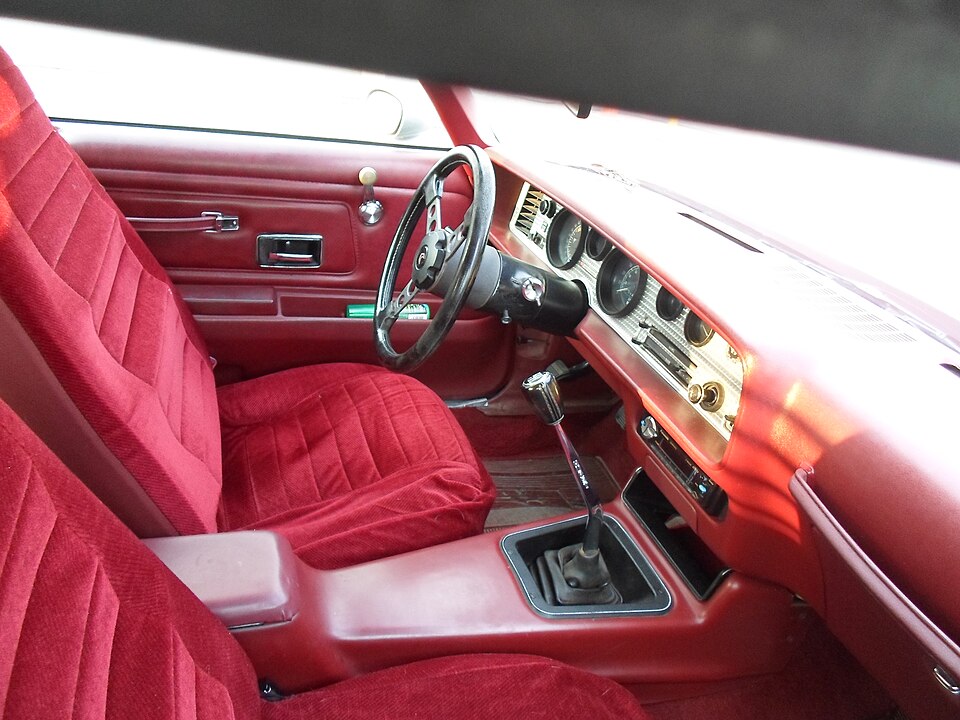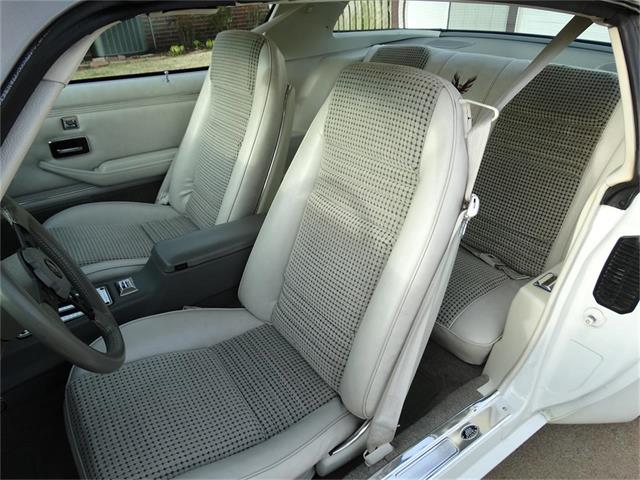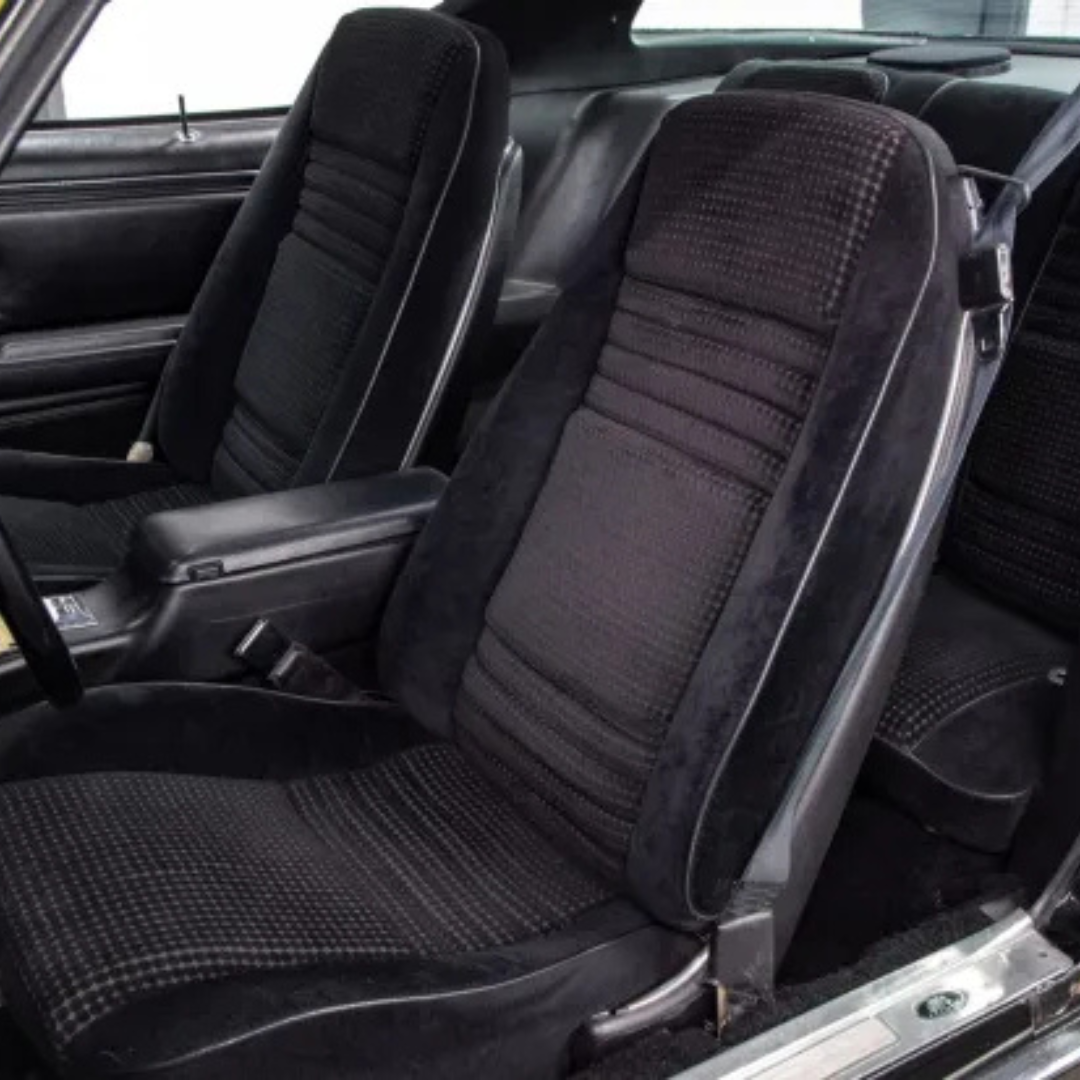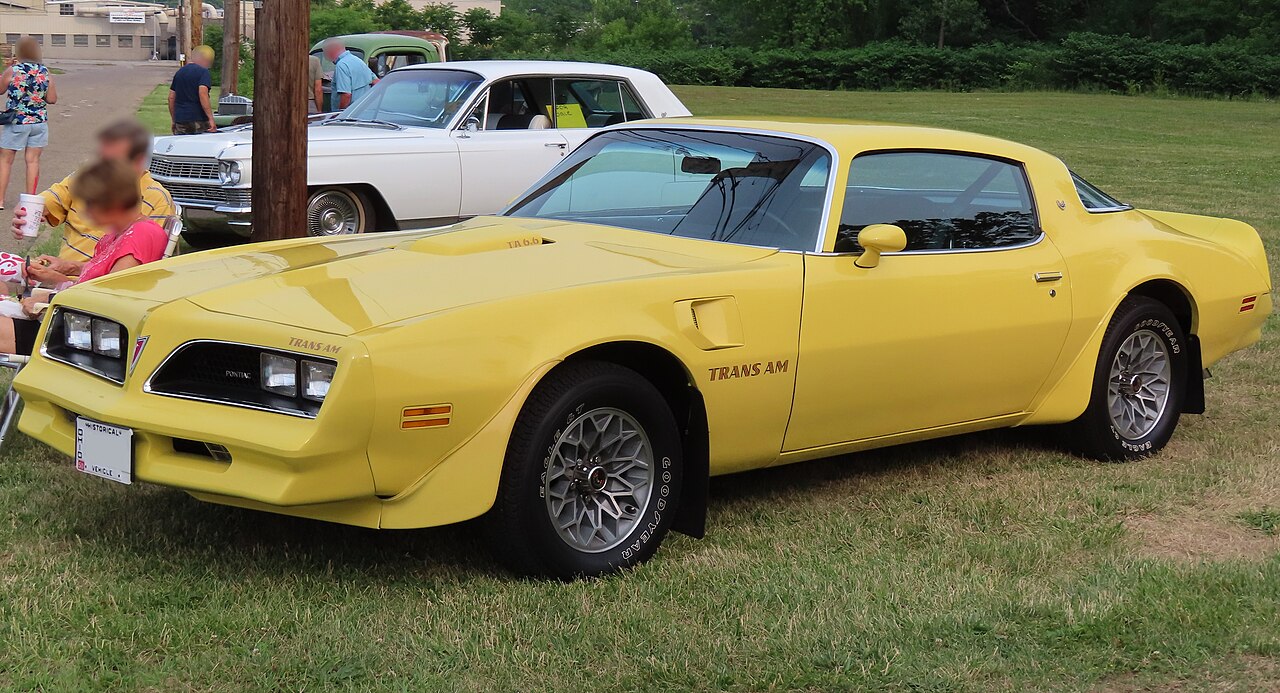
The moment you pull apart aging 1977 Firebird seat upholstery, two things become immediately obvious: Pontiac built these interiors to last, and four-plus decades of sun, sweat, and use have a way of winning eventually. Whether your vinyl is cracked at the bolsters, faded to a chalky gray, or simply worn through at the driver's seat cushion, sorting out the right replacement material starts with understanding exactly what left the factory in your car.
What the Factory Installed: Materials and Construction
All 1977 Firebird seat upholstery was vinyl. There were no factory cloth or leather options for the 1977 model year across any trim level. This is not a gray area. The only second-generation Firebird to receive factory leather was the 1979 10th Anniversary Trans Am, designated Y89, which came with silver leather-trimmed seats as part of that specific package. Every other second-gen car across the entire 1970 to 1981 run, including all 1977 models, used vinyl.
The seat construction followed a consistent pattern for the era: a steel frame, spring support (either coil or sinuous wire depending on the specific seat application), urethane foam cushioning, and vinyl covers stitched and hog-ringed to the frame. The vinyl itself had a distinct textured grain, and the center sections of the seat cushion and backrest typically featured a pleated or ribbed design that contrasted with the smoother vinyl used on the outer bolsters and side panels. This combination of textures gave the seats a layered, intentional look that is worth replicating accurately on a restoration.
The Trans Am seats deserve specific attention. The 1977 Trans Am came standard with deluxe bucket seats. These were not an option or an upgrade. They were standard Trans Am equipment. The seats were known for their firm lateral support and a more aggressive profile compared to the softer feel of the base Firebird or Esprit seats. If your car is a Trans Am, that deluxe bucket shapes everything about which reproduction upholstery you can order.
Interior Color Options and How They Were Specified
Pontiac offered several interior color choices for the 1977 Firebird, and those choices were coordinated with exterior color availability in the option guide rather than being a free-pick situation. Black was the most widely available interior color across all trim levels and is by far the most common one encountered today. Camel, a medium tan/beige, was another popular choice. White and Oyster tones appeared in the lineup as well, and some trim levels offered additional selections depending on what exterior color was specified.
Because interior and exterior colors were coordinated in the order guide, some interior choices were restricted to certain body colors. A correct, documented restoration requires knowing exactly which interior color code your car carried from the factory. The trim tag on your door jamb is your best on-car source. The broadcast sheet, if it survived under the carpet or behind a panel, will tell you the full original option breakdown.
If your original paperwork has not survived, PHS Automotive Services specializes in decoding GM factory build records using your VIN and can produce documentation of what your specific car was built with. For a numbers-correct restoration, that kind of primary sourcing is worth the cost.
One note for anyone drawn to 1977 Trans Ams through the Smokey and the Bandit connection: the vehicles used in filming were specially built cars, not standard production 1977 Trans Ams ordered from a dealer. A stock 1977 Trans Am with a black exterior is visually similar but is not a Bandit car, and the interior specifics of the film vehicles may not match what a production car carried.
Trim-Level Differences That Affect Your Upholstery Order
This is where many restorers make an expensive mistake. The seat covers for a 1977 base Firebird are not interchangeable with the covers for a 1977 Trans Am. Ordering the wrong set means either returning the parts or living with a fitment that will be obvious to anyone who knows these cars well.
Base Firebird and Formula
The base Firebird and Formula used bucket seats consistent with Pontiac's standard second-gen seating specifications for those models. The upholstery pattern, stitching configuration, and bolster treatment are specific to these applications. The Formula shared substantial mechanical hardware with the Trans Am but was positioned at a different interior price point, and the seat upholstery reflects that. Do not assume Formula and Trans Am covers are the same.
Esprit
The Esprit was the comfort-oriented member of the 1977 Firebird family. Its seats leaned toward a softer ride feel rather than the firm lateral support prioritized in the Trans Am. Upholstery treatment in the Esprit differed accordingly, and the seat geometry may not match other models in the lineup. If your car is an Esprit, confirm the specific seat style and option codes before ordering any replacement material.
Trans Am
The deluxe buckets in the 1977 Trans Am have a distinctive shape that requires Trans Am-specific upholstery. The seat back profile, side bolster geometry, and headrest integration are different enough from other Firebird models that a generic second-gen seat cover will not fit correctly. Reproduction suppliers who specialize in second-gen Firebirds offer Trans Am-specific kits, and the product listing must explicitly call out Trans Am compatibility for 1977 before you commit.
Assessing What Your Seats Actually Need Before You Order
New upholstery alone will not fix a seat with structural problems underneath. Before ordering anything, pull the seats out and evaluate them honestly.
Flip each seat over and inspect the frame welds, particularly at the seat track mounting points. These are stress areas that crack over time. Rock the seatback against the frame to feel for looseness in the recliner mechanism. Press firmly into the cushion in multiple spots and listen for spring noise or feel for coil contact through the foam. If the foam has collapsed or the springs have shifted, new covers over that foundation will look wrong within a season.
Foam replacement is frequently necessary on seats this age. Reproduction seat foam is available and restores the original cushion contour that the factory designed the seat cover to fit. Skipping foam on a seat that needs it is one of the most common corners restorers cut and later regret.
Pay attention to the condition of the existing vinyl, too. Second-gen seat vinyl tends to harden and shrink with age. Material that looks passable when damp from a cleaning product can crack badly as it dries. If the vinyl is hard and brittle rather than soft and flexible, plan on replacing it entirely.
Installing Reproduction Upholstery Correctly
Seat upholstery installation on second-gen Firebirds rewards patience above everything else. The covers attach to the seat frame and foam via hog rings, and the sequence in which you work through the installation matters.
Fit the cover loosely over the foam first to confirm fit before committing to any rings. Work from the center of each panel outward, pulling the material evenly to avoid diagonal stress wrinkles. Use hog ring pliers rather than standard pliers. They close the rings cleanly without distorting them, which matters when you are working in tight areas near the seatback channels. Pull the cover firmly but not aggressively. Overpulling distorts the stitched pattern and creates tension lines visible on the finished seat.
The visible seams on a correctly installed second-gen seat cover should align symmetrically across the cushion face and seatback. If your seams are pulling to one side, the cover is not centered and needs to be repositioned before you close the hog rings along that section.
For a show-quality Trans Am restoration, many owners have the covers professionally installed after replacing foam and rebuilding the frame. For a driver-quality restoration, careful DIY installation is achievable with the right tools, a clean workspace, and time.