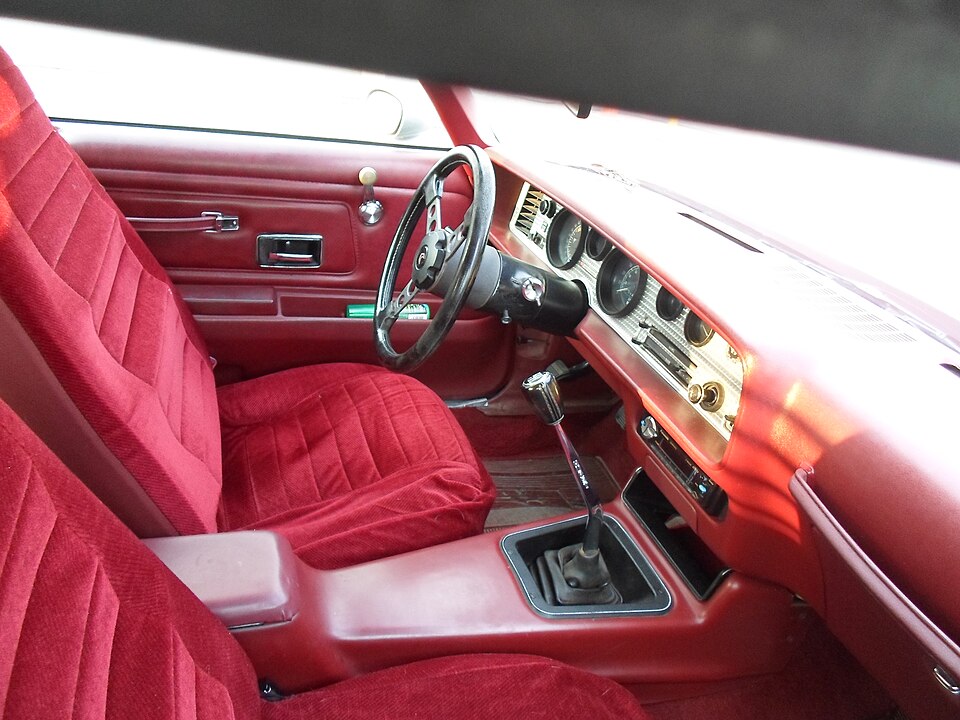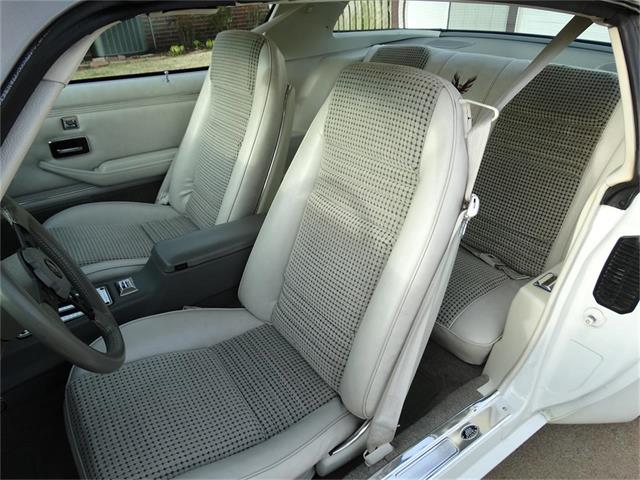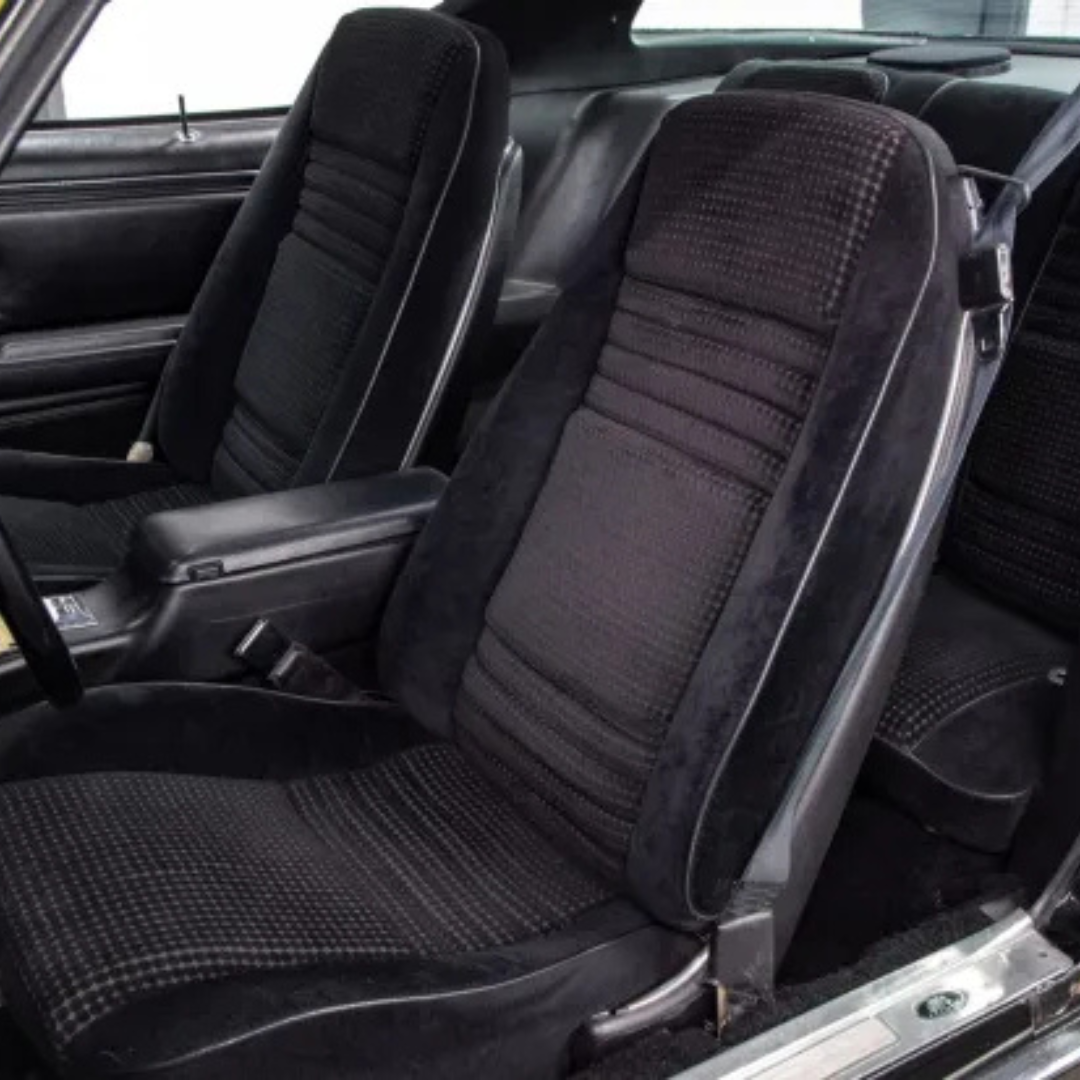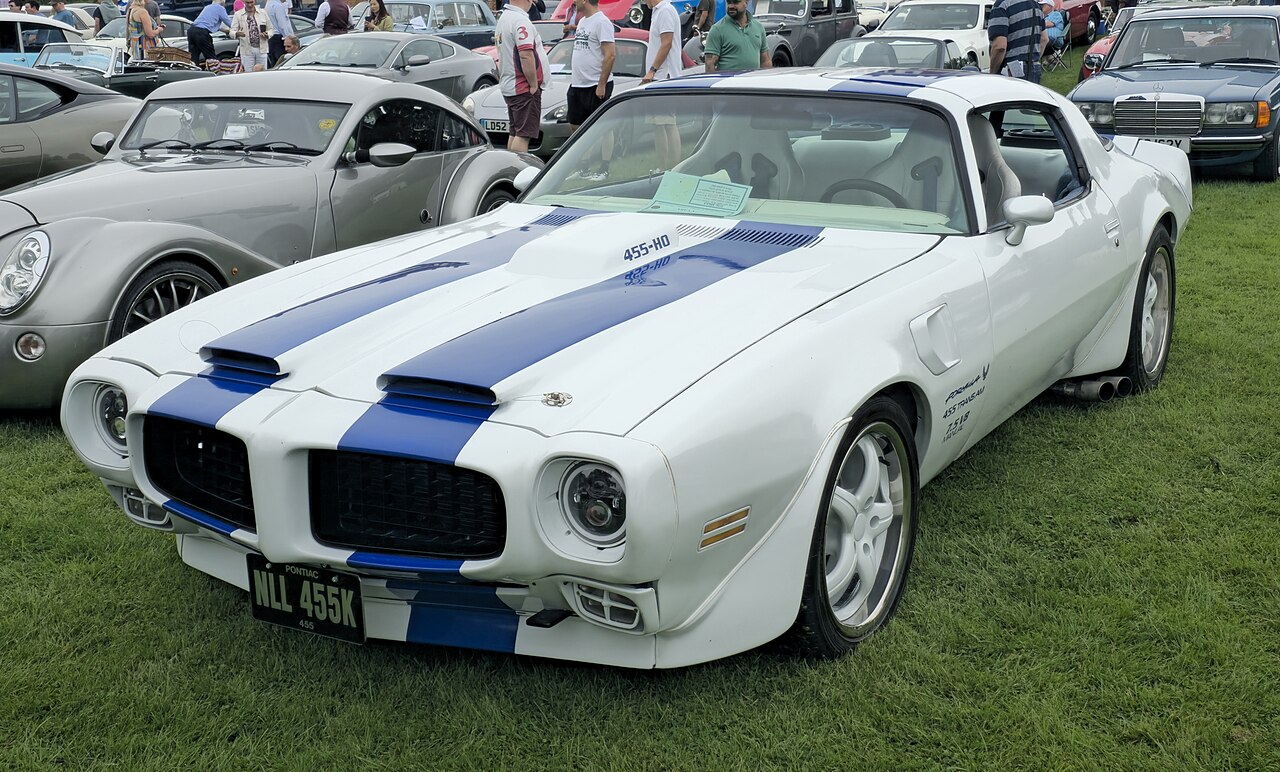
The 1979 10th Anniversary Trans Am seat covers represent one of the most specific replacement items in all of second-gen restoration. This is not a standard vinyl swap, and the distinction matters. The 1979 10th Anniversary Trans Am, sold under RPO Y89, is the only car in the entire second-generation (1970-1981) Trans Am lineup that came from the factory with leather-trimmed seats. That single fact shapes every decision you make during an interior restoration.
What Made the 10th Anniversary Interior Unique
Pontiac released the 10th Anniversary Trans Am in 1979 to mark a decade of the model. Approximately 7,500 units were produced, all finished in Platinum Silver Metallic. The interior matched the exterior color theme with unusual consistency: silver carpet, silver instrument panel trim, silver door panels, and silver leather-trimmed bucket seats. T-tops were standard equipment on every car.
The seats themselves used the deluxe bucket seat structure, the same basic seat found across the Trans Am lineup for 1979. On every other second-gen Trans Am, those seats wore vinyl. On the 10th Anniversary, Pontiac specified leather-trimmed facings, which elevated the interior quality and set this car apart at shows and in POCI judging. The Pontiac-Oakland Club International (POCI) is the primary registry resource for verifying individual car history and production data on these cars. Because the seat structure is shared with other 1979 Trans Ams, replacement covers from the wrong model will physically attach. The problem is that no other 1979 Trans Am used leather, and the silver shade on a generic vinyl cover will not match the Platinum Silver interior correctly. A casual observer might not notice, but a judge or serious buyer will.
The Seat Cover Specification You Need to Match
Before ordering anything, understand exactly what the factory built. The 10th Anniversary seat covers used silver leather on the primary facing panels, including the seat bottom cushion face and the seatback face. These leather panels paired with complementary vinyl on the side bolsters and rear panel surfaces. This arrangement was standard practice for "leather-trimmed" seats in 1979 production; the term referred to leather on the primary seating surfaces you contact directly, with vinyl used elsewhere.
This detail matters when you evaluate reproduction seat covers. A set marketed as "silver" or even "platinum silver" is not necessarily correct if the facing material is vinyl throughout. A proper restoration requires leather-faced primary panels, at minimum, to replicate what the factory delivered.
The seat also has specific stitching patterns and panel divisions that are part of the correct appearance. Covers that do not replicate the original stitching layout will look wrong even if the color is accurate. When evaluating any supplier's product, ask specifically about stitching pattern accuracy for the Y89 application, not just general 1979 Trans Am fitment.
Sourcing Correct 1979 10th Anniversary Trans Am Seat Covers
The supply chain for these covers is more limited than for standard 1979 Trans Am vinyl sets. Three factors drive that scarcity. The production run of roughly 7,500 cars is small relative to the broader Trans Am population. The leather specification means higher material cost and more demanding production. And demand has historically been modest enough that not every major supplier carries a current reproduction in stock at all times.
New Old Stock
Genuine NOS seat covers for the 10th Anniversary are effectively impossible to find in 2025. If a seller claims to have them, inspect the provenance carefully before paying a premium. The odds of encountering real NOS in uninstalled condition are extremely low after 45 years.
Reproduction Sets from Restoration Suppliers
Classic Industries and Eckler's are the two primary catalog suppliers for second-gen Firebird and Trans Am restoration parts. Both carry broad seat cover inventories for 1970-1981 cars. Availability for the 10th Anniversary specifically changes with production runs, so contact them directly to confirm current stock and material specification before placing an order.
When you contact any supplier, ask these questions before ordering:
- Is the seat facing material leather or leather-look vinyl?
- Does the stitching pattern match the original Y89 specification?
- Is the silver color matched to the Platinum Silver interior, or is it a generic silver?
- What material covers the non-facing surfaces?
A supplier who cannot answer those questions specifically is probably not selling a correct reproduction.
Custom Upholstery as an Alternative
For restorers who cannot source a reproduction set that meets the original specification, custom upholstery from a shop experienced with classic Pontiacs is a legitimate option. A skilled trimmer can source silver leather in a weight and finish appropriate to the period and build covers that match the factory pattern. This route typically costs more than a reproduction set, but it gives you control over material quality and accuracy.
If you go the custom route, bring reference photographs of original seats along with any factory documentation you have. The more reference material your trimmer has, the closer the finished result will be.
Installation Considerations
The deluxe bucket seat structure in a 1979 Trans Am is well understood. Covers attach with hog rings to the seat frame, and a competent DIY installer with the right hog ring pliers can complete the job without professional help. The challenge with leather panels is the material behavior during installation. Leather is less forgiving than vinyl; pulling too hard on a facing panel while hog-ringing it can crease or distort the surface in ways that are difficult to correct afterward. Work slowly, use a trim tool to seat the material properly, and avoid forcing any panel into position.
Evaluate the seat foam before you start. Foam in a 45-year-old car is almost certainly degraded to some degree. Sagging or crumbling foam will undermine the look of even correct new covers. The seat foam dimensions for the 10th Anniversary match standard 1979 Trans Am seat foam, since the underlying deluxe bucket structure is the same across the lineup. ## Protecting Your Work After Installation
Leather panels require periodic conditioning to prevent cracking, especially in cars that see temperature swings between events. Apply a conditioner appropriate for automotive leather on a regular schedule. Avoid silicone-based dressings, which can cause surface deterioration over time.
If the car sits in storage between shows or driving events, breathable seat covers over the finished upholstery will reduce UV exposure and dust accumulation without trapping moisture against the leather.