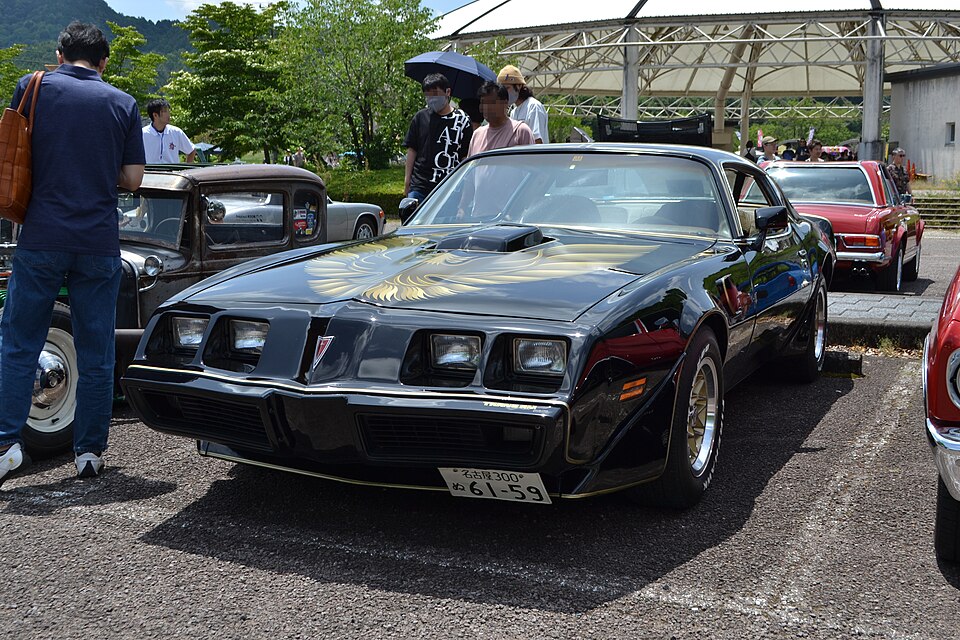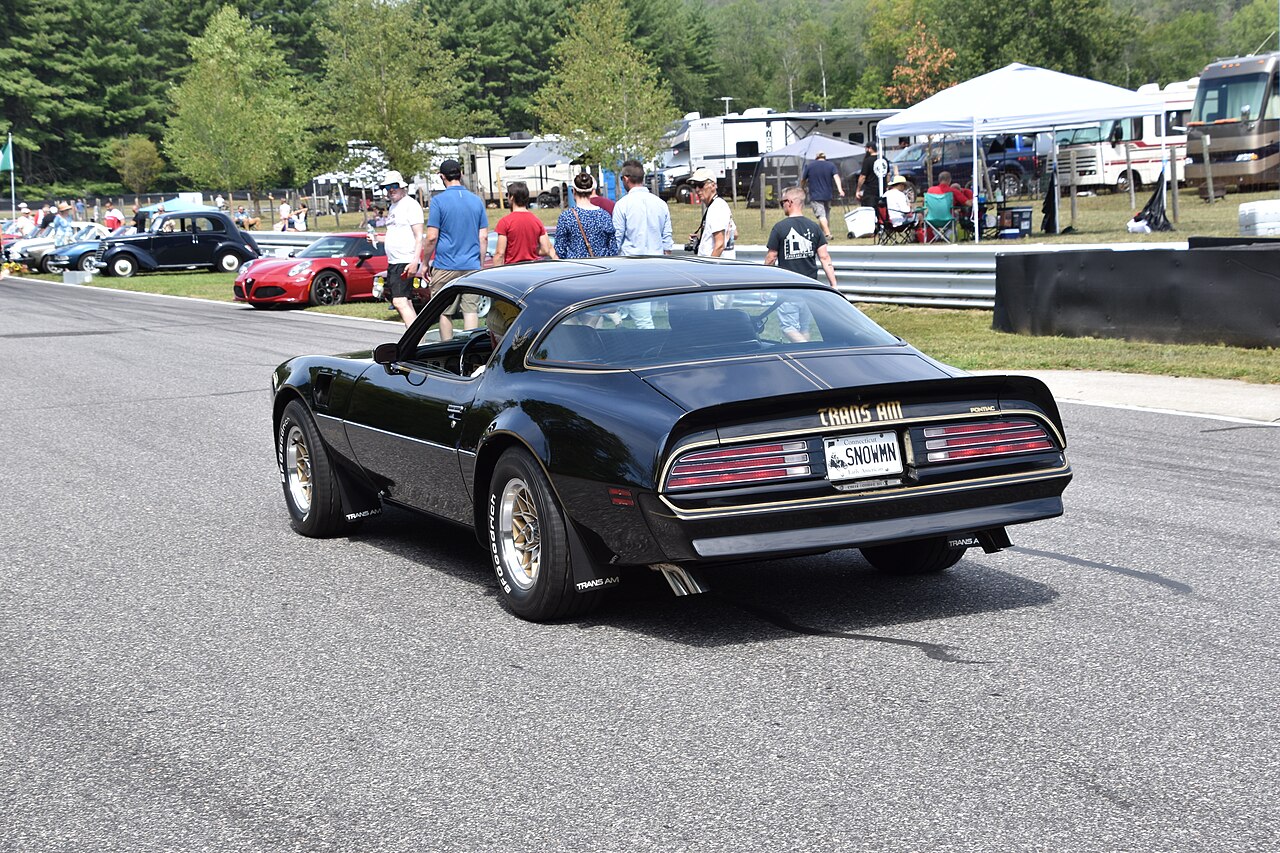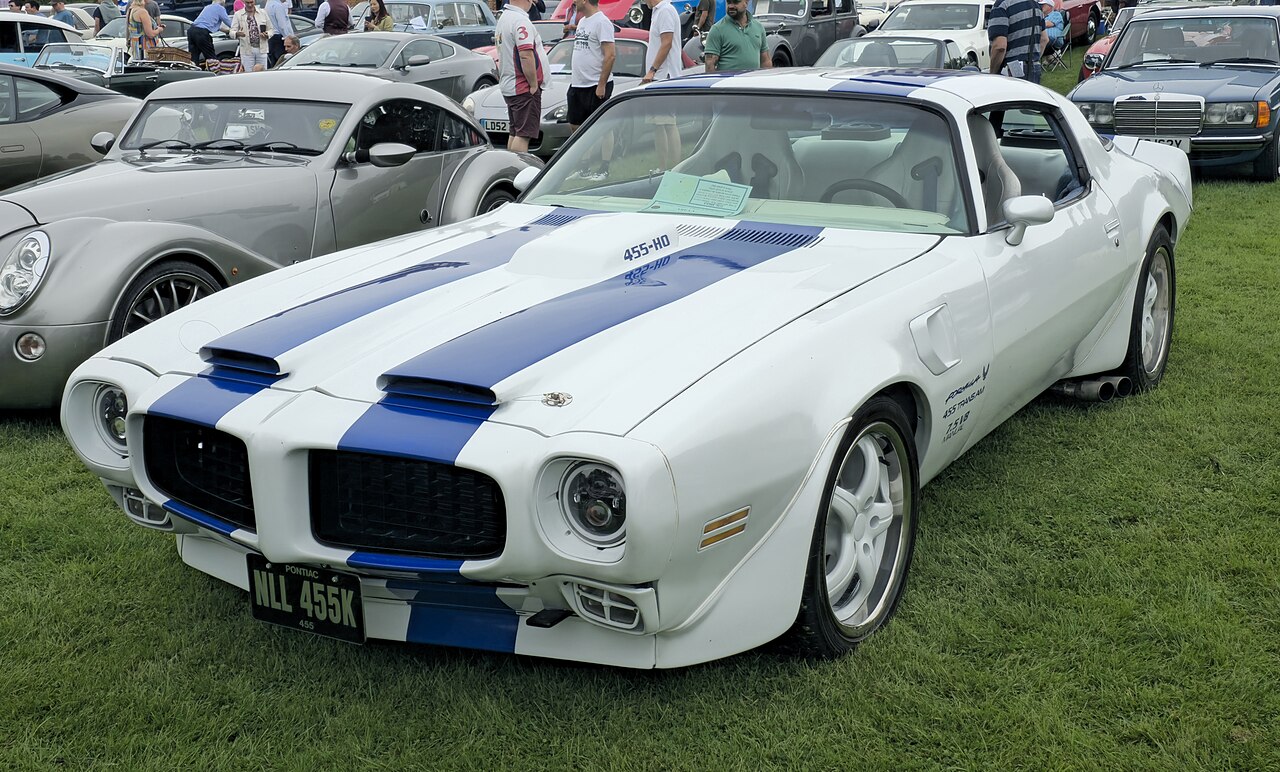
The market for a 1979 Pontiac Trans Am for sale has tightened considerably over the past decade. Clean, documented cars are trading at prices that would have seemed absurd fifteen years ago, and the gap between a standard driver and a numbers-matching W72 or 10th Anniversary car grows wider every year. Before you make an offer, you need to know what you are actually looking at, what it should cost, and how to insure it correctly once it is in your garage.
What You Are Actually Shopping For
The 1979 Trans Am was the high-water mark of the second generation (1970-1981) in terms of popularity. Pontiac moved more Trans Ams that model year than in any other year of the second-gen run, which means cars are still reasonably available. But that volume also means there are more opportunities for sellers to misrepresent what they have, and more non-original cars circulating with incorrect or missing documentation.
Three engine configurations left the factory in 1979:
403ci Oldsmobile V8. This was the standard Trans Am engine, rated at 185 horsepower net. The Olds-built 403 is a torquey, durable unit that served the majority of 1979 Trans Ams well. Because the 400ci W72 was not California emissions-certified, California buyers received the 403 as standard equipment. Do not let anyone tell you a California-spec 403 car is a lesser example. It is correctly configured for its original market.
400ci Pontiac W72 (T/A 6.6). The W72 option code brought the Pontiac-built 400 cubic inch engine rated at 220 horsepower. This was the performance choice, and 1979 was its final year of availability in the second-gen lineup. That distinction matters to collectors. A factory W72 car with supporting documentation commands a meaningful premium over a comparable 403 car. Verify the engine code against the trim tag and any surviving build sheet before accepting a seller's description.
301ci Pontiac V8. Available as a rare credit option, the 301 was uncommon and underwhelming in this application. If you encounter one, treat it as a curiosity rather than a selling point. Many 301 cars have been re-engined in the decades since.
Beyond the engine, identify the option codes on any car you consider. The WS6 Special Performance Package is a suspension and handling option: it added heavy-duty front and rear sway bars, upgraded suspension tuning, and specific wheel and tire fitment. It has no interior component. The Y84 Special Edition delivered the black-and-gold exterior treatment associated with the Bandit films, paired with a specific interior combination. Both are legitimate collectible options that add value when documented correctly.
Which Variant Commands the Biggest Premium?
The 10th Anniversary Trans Am (Y89)
Pontiac produced approximately 7,500 10th Anniversary Trans Ams for the 1979 model year. Every one left the factory in Platinum Silver Metallic with a silver and charcoal interior. More significantly, the Y89 carried the only factory leather-trimmed seats ever offered on a second-generation Trans Am. Every other second-gen Trans Am, including every other 1979 model, left the factory with vinyl seats. If a seller claims their non-Y89 1979 Trans Am has factory leather, the seats are either replacements or the claim is simply false.
10th Anniversary cars are easy to identify when legitimate: silver paint, silver turbine wheels, specific badging, and that distinctive interior. Well-preserved, numbers-matching examples with full documentation have exceeded $70,000 at auction. Honest drivers in the $35,000 to $50,000 range are the current reality for presentable but not show-perfect cars.
W72 Cars
A factory W72 car with a matching engine and verifiable documentation sits one tier below the Y89 in collector priority. The combination of 1979 being the W72's final year and the Pontiac-built 400's strong enthusiast following keeps demand consistent. Expect to pay a 20 to 30 percent premium over a comparable 403 car in similar condition.
Standard 403 Cars
Do not overlook clean, honest 403 cars. They are the most available, often the most affordable, and the 403 is a proven powerplant with solid parts support. A well-sorted 403 driver with good bodywork, a correct interior, and original colors is a better buy than a neglected W72 with rust issues and a questionable history.
Inspecting a 1979 Trans Am Before You Buy
Rust is the primary threat. The second-gen body is particularly vulnerable in the lower door skins, the rear quarter panels behind the wheel openings, the trunk floor, the floor pans, and the cowl area beneath the base of the windshield. Probe every suspect area and get under the car yourself. Do not accept a seller's verbal assurance that the car is rust-free without independent confirmation.
Body panel alignment tells a story. The second-gen nose is fiberglass, and it can be reshaped or replaced without obvious evidence at a glance. Check the gaps between the hood and front fenders on both sides. Uneven gaps suggest collision repair or a replacement nose fitted without care.
Interior condition matters both for comfort and for value. The standard seat in a 1979 Trans Am is the Deluxe Bucket, and it is a vinyl seat. Cracked or split vinyl is common on a 45-year-old car, but it is also a documented restoration cost that should factor into your offer. Correct foam and upholstery materials in period-accurate specifications are available from restoration suppliers, but quality varies widely.
Check the trim tag, typically located on the driver-side door jamb or firewall. This is the factory record of the car's build configuration, including paint code, interior code, and option codes. It should match what the seller describes. If the trim tag is missing or shows discrepancies the seller cannot explain, treat that as a serious flag.
Ask for all available documentation: original window sticker, build sheet (sometimes found rolled up beneath seat cushions or under carpet), title history, and any maintenance records. The more complete the paper trail, the more confident you can be.
Understanding 1979 Trans Am Values
Hagerty's valuation database is the most reliable public resource for current market data on collector cars. It tracks actual sale prices across condition grades, and the 1979 Trans Am has its own listing that distinguishes standard cars from special editions. Use it as your anchor before any negotiation.
As a general framework for the current market:
Project cars with significant rust, incomplete mechanicals, or major missing components start below $10,000, sometimes considerably below. Budget honestly for what the restoration will actually cost before you commit.
Honest drivers, cars that run and drive well and present cleanly without pretending to be show-ready, typically trade between $18,000 and $32,000 depending on engine, options, and color combination.
Show-quality, numbers-matching 403 or W72 cars with verifiable documentation occupy the $35,000 to $55,000 range and climbing.
10th Anniversary cars are a separate category entirely. Documentation, matching numbers, and condition are everything at that level, and values at the top of the market can exceed what any published guide captures in real time.
Protecting Your Investment With the Right Insurance
Standard auto insurance is not built for collector cars. If your 1979 Trans Am is valued as a collectible and your policy is a standard ACV (actual cash value) policy, a total loss claim will pay what a claims adjuster decides the car is worth, often a figure based on depreciation tables rather than collector market reality. For a car that has appreciated significantly, that gap can mean tens of thousands of dollars.
Agreed-value coverage is the correct approach. You and the insurer agree on the car's value when the policy is written. If the car is totaled or stolen, you receive that agreed amount, not an adjuster's estimate. This is standard practice in the collector car insurance market, and it is not difficult to obtain for a well-documented second-gen Trans Am.
When you apply for coverage, documentation supports a higher agreed value. A car with a trim tag, a build sheet, and an original window sticker will sustain a better valuation than an identical-looking car with nothing to back it up. The paperwork that protects you from buying a clone also works in your favor when it comes time to insure the car correctly.