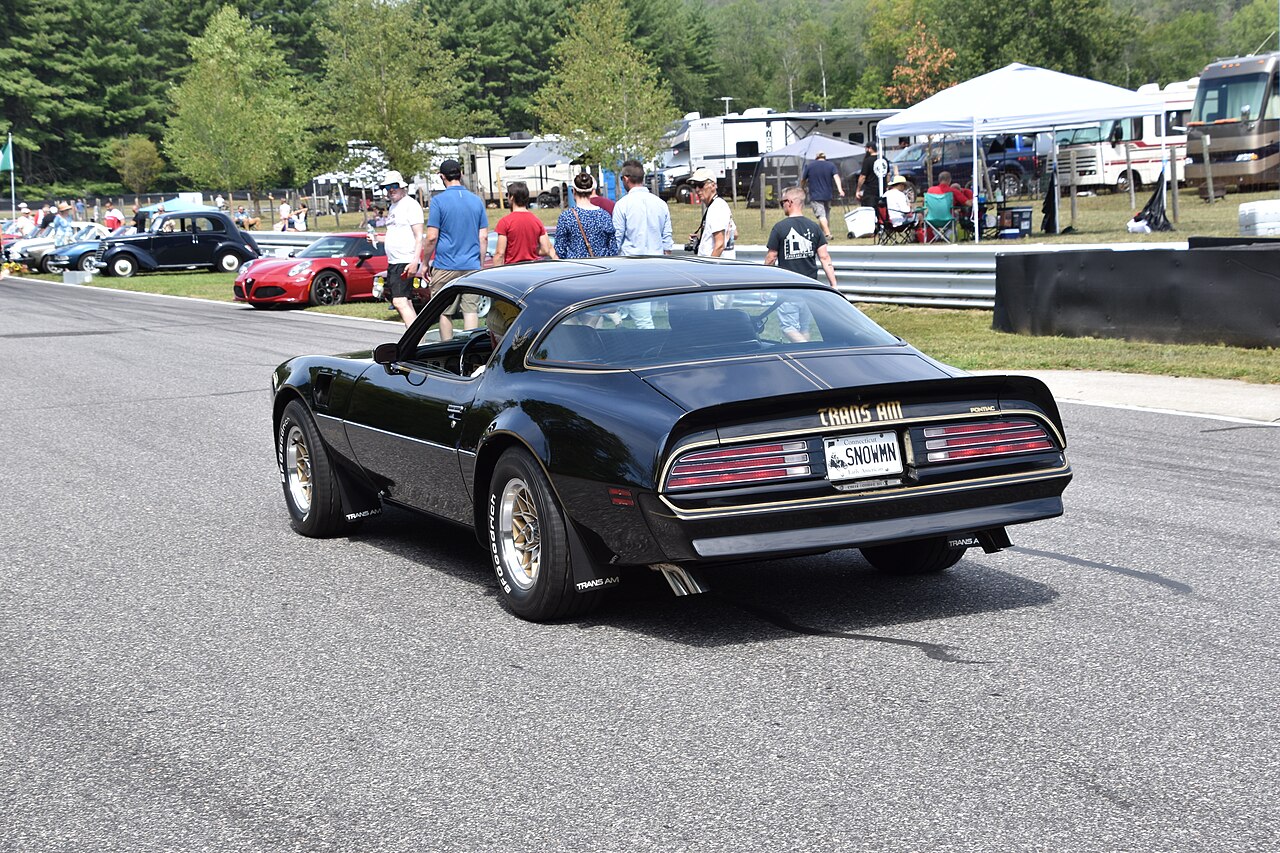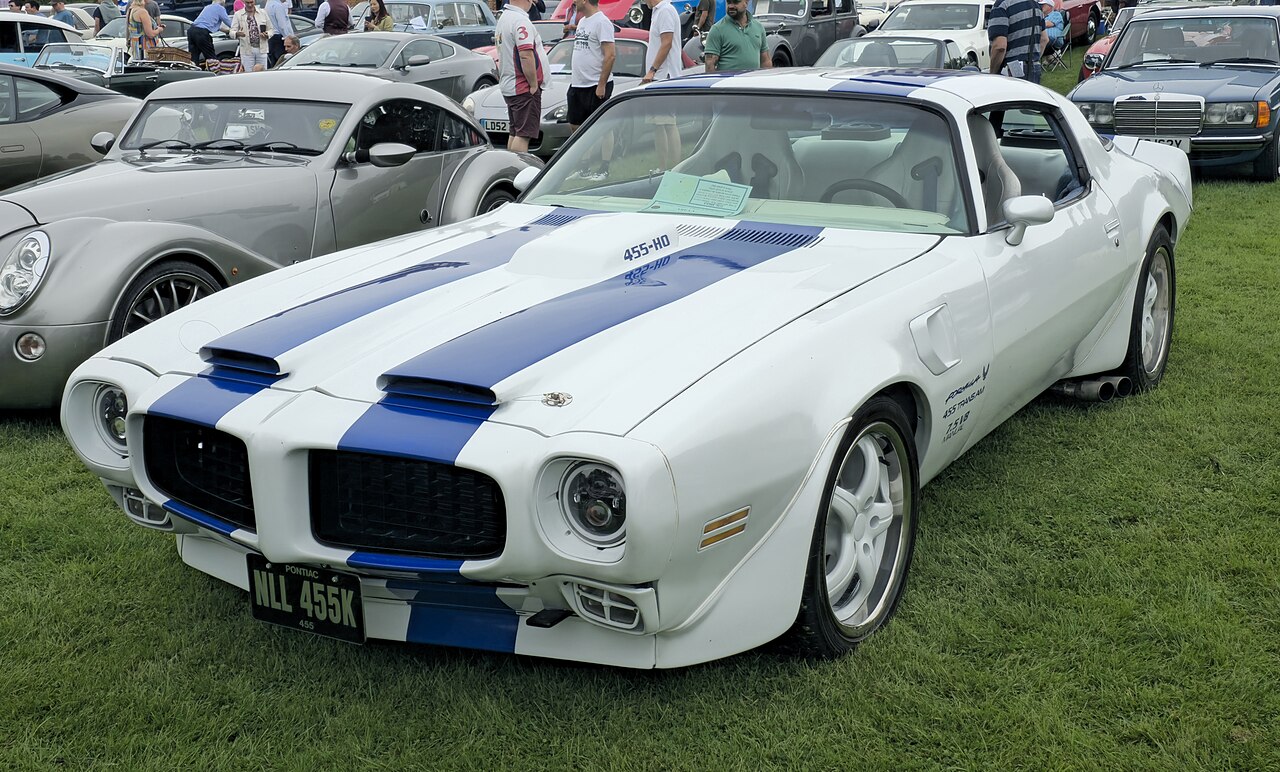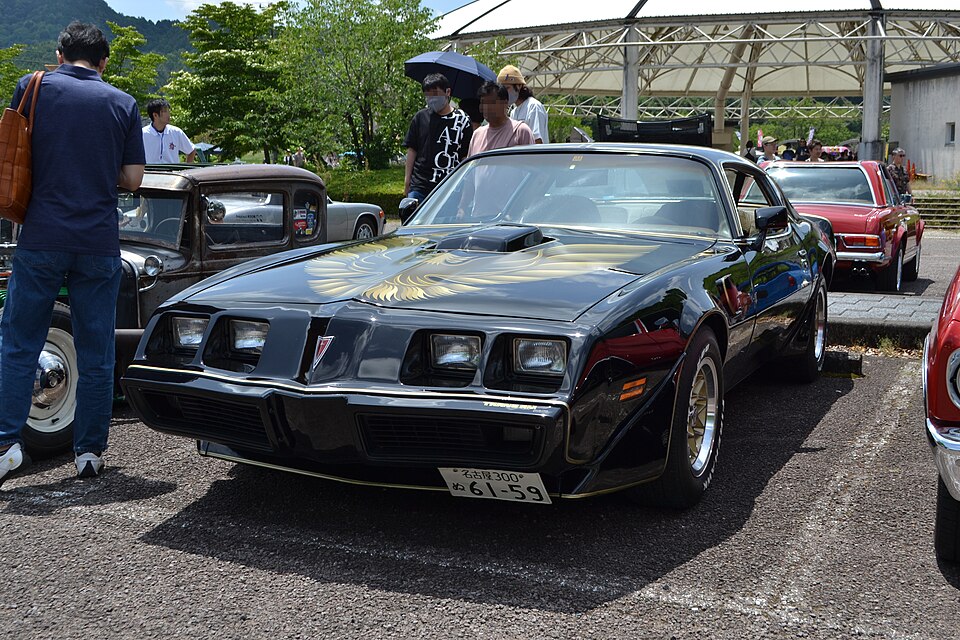
1979 Trans Am value starts with one fact. It was the biggest production year the Trans Am ever had. That means there are plenty of cars out there, so a rough standard car doesn't bring crazy money. A clean, documented car with the right options is a different story, and that gap keeps getting wider.
Here's what moves the number and what cars are actually selling for right now.
What are 1979 Trans Ams selling for right now?
Special Editions are leading the market. Classic.com's market benchmark for the 1979 Trans Am Special Edition sits at $69,543 as of October 2026. The median sale price is $61,500. (Classic.com, 1979 Trans Am Special Edition)
Recent Special Edition sales:
| Date | Sale | Venue |
|---|---|---|
| Aug 2026 | $62,500 | Bring a Trailer (Prescott, AZ) |
| Jul 2026 | $76,000 | GAA (Greensboro, NC) |
| Jun 2026 | $84,700 | Barrett-Jackson (Columbus, OH) |
| Mar 2026 | $265,000 | Bring a Trailer (44 original miles) |
| Jan 2026 | $220,000 | Mecum (Kissimmee, FL) |
Don't price your car off the last two. Those are museum-grade, low-mile cars. The middle of the market is the $60,000 to $85,000 range.
Asking prices for all 1979 Trans Ams on Classic.com ran from about $25,000 to $128,000 in October 2026. Asking isn't selling, though. Use sold prices when you set a number. (Classic.com, 1979 Trans Am)
What is each condition grade worth?
Condition is the biggest single factor. The industry uses a 1 to 4 scale.
| Grade | What it means | 2026 value (403 coupe) |
|---|---|---|
| #4 Fair | Runs and drives, needs work, flaws you can see from 10 feet | $15,100 |
| #3 Good | Solid driver, some wear, may have an older restoration | $24,900 |
| #2 Excellent | Sharp car, correct details, could win a local show | $45,000 |
| #1 Concours | The best in the world, fully documented | $61,200 |
Source: Hagerty Valuation Tools, October 2026, 1979 Trans Am 2dr Hardtop Coupe.
Most sellers grade their car one step higher than it really is. A repaint in a close-but-wrong color, an aftermarket carb, or non-original wheels can drop a car a full grade. Have someone else grade it before you price it.
Which engine is worth the most in a 1979 Trans Am?
The Pontiac 400 (W72) is the one collectors want. It's also the rarest of the three engines. Here's the 1979 Trans Am breakdown from Pontiac's production records (tran-zam.com):
| Engine | Transmission | Built |
|---|---|---|
| Oldsmobile 403 (L80) | Automatic only | 94,773 |
| Pontiac 301 (L37) | Manual or automatic | 14,009 |
| Pontiac 400 (W72) | 4-speed manual only | 8,326 |
That's the key point most buyers miss. If a 1979 Trans Am has an automatic and a 400, something was changed. Every 1979 automatic Trans Am left the factory with a 403 or a 301. The hood decal helps here. "T/A 6.6" means a factory Pontiac 400. "6.6 LITRE" means the Olds 403.
Hagerty values a #3 Good 400 car at $26,600, vs $24,900 for a 403 and $21,600 for a 301. At #1 Concours the gap grows to $71,900 vs $61,200 vs $56,400. Hagerty lists 220 horsepower for the 400, 185 for the 403 and 150 for the 301.
Does a 403 hurt value? A little, but not much. It's the correct factory engine for about 81% of 1979 Trans Ams. A clean, original 403 car is worth more than a 400 car with a swapped or non-original engine. The 301 brings the least, even though Pontiac built more of them than 400s.
For the full engine story, read our 1979 Trans Am engine options guide.
How much does the 10th Anniversary add?
The 10th Anniversary is its own market. Pontiac built 7,500 of them in 1979: 1,817 with the 400 and 4-speed, and 5,683 with the 403 automatic (tran-zam.com).
Every factory option came standard on these cars. That included silver leather seats and mirrored T-tops. The only choice a buyer made was the engine.
Classic.com had two 10th Anniversary cars listed in 2026, asking $33,500 and $84,995. That's a huge spread, and it comes down to condition and documentation. Hagerty values a #3 Good Anniversary car at $48,400 with the 400 and $34,200 with the 403. The 400/4-speed cars carry a clear premium, and one with paperwork sits at the top.
One detail most owners never notice: the seats are silver leather, but the interior plastics are a separate warm gray shade. It's factory, not a mismatch from a bad restoration. If you're restoring one, see our 10th Anniversary seat guide.
How much does the Y84 Special Edition add?
Close to double. Hagerty values a #3 Good Y84 at $46,300 with the 403 and $47,700 with the 400, vs $24,900 for a standard 403 car. Y84 values are up about 16% over the past year.
The Y84 Special Edition is the black-and-gold "Bandit" look. Pontiac built 11,554 of them in 1979. Every one had T-tops. Most (9,874) had the 403 automatic. Only 1,107 got the 400 with a 4-speed (tran-zam.com).
Classic.com's benchmark for 1979 Special Editions is about $69,500. Compare that to roughly $42,000 for standard second-gen Trans Ams overall. (Classic.com, 2nd Gen Trans Am)
The catch: this is the most cloned Trans Am ever built. Black paint and a gold bird are easy to add. Proving it's a real Y84 takes paperwork. Our Y84 Special Edition guide covers what to look for.
Do T-tops and the WS6 package add value?
Yes, if they're done right.
T-tops: Outside of the Special Editions, 38,476 1979 Trans Ams had T-tops. Good seals, a clean headliner and dry carpet add value. Leaking tops are a warning sign. Water gets into the headliner, carpet and floor pans, and floor rust is expensive.
WS6: The WS6 handling package added bigger sway bars, its own suspension tuning and specific wheels and tires. A documented WS6 car brings a premium over a base car. "Documented" is the important word. Wheels can be swapped in an afternoon.
Does color matter?
Some. Black sells fastest, mostly because of the Special Edition. Factory colors in good original paint beat any repaint, even a nice one. Check our 1979 Trans Am colors guide to see whether a car's color was offered that year.
How do I prove what my Trans Am is?
Paperwork is worth real money. These are the documents that matter:
- Window sticker: shows original options and price.
- Build sheet (broadcast sheet): often found under the rear seat or on top of the gas tank.
- PHS documentation: PHS Automotive Services pulls the original factory records using your VIN, for a small fee. For any car over about $40,000, it's worth getting.
- Title history: an unbroken chain of owners helps.
Badges and decals can be faked. Factory records can't.
What should I check before buying or selling?
Look at these spots first:
- Floor pans and torque boxes. Pull back the carpet if you can.
- Rockers and the area around the rear window. Common rust spots.
- T-top seals and the headliner. Look for water stains.
- Engine codes. Make sure the engine matches the decal and the transmission.
- Interior. Original seats in good shape add value. Most seat failure comes from foam breaking down into a yellow powder, not from the cover itself. If the springs are poking through at the seams, the foam is gone.
A pre-purchase inspection costs a few hundred dollars. On a $60,000 car, that's cheap.
If the interior is too far gone to save, a fresh set of seats makes the car look and feel right again. We build custom 1978-1981 Trans Am seat covers by hand, made to fit your original frames.
How should I insure a 1979 Trans Am?
Get agreed-value coverage. A regular policy pays "actual cash value" after a loss. That's often far below what your car would sell for. On a $60,000 car, the gap can be tens of thousands of dollars.
An agreed-value policy locks in the car's value when you sign up. If it's totaled, that's what you get. No arguing.
Two companies that offer it: