If you are looking up the 1979 Trans Am 403 hp figure, the number is 185 horsepower. That is the SAE net rating Pontiac published for the 403ci Oldsmobile V8 (RPO L80) installed as the standard engine in the 1979 Trans Am. Torque was rated at approximately 320 lb-ft at 2000 rpm. The engine ran an 8.0:1 compression ratio, used a Rochester Quadrajet four-barrel carburetor, and was fitted with the full emissions equipment required for the 1979 model year. Those are the factory numbers, not dyno estimates or period speculation.
The 403ci Oldsmobile V8: Horsepower Rating and Core Specs
The 403ci was an Oldsmobile-built engine, not a Pontiac design. Its bore measured 4.351 inches with a 3.385-inch stroke, giving 403 cubic inches of displacement, which rounds to 6.6 liters. That 6.6-liter figure showed up on the shaker hood scoop decal of every 1979 Trans Am equipped with this engine. If a 1979 Trans Am has a shaker scoop reading just "6.6 Litre" with no additional text, it almost certainly left the factory with the 403.
Compression at 8.0:1 was a byproduct of the emissions era. The 1970 muscle car peak had used compression ratios in the 10:1 to 11:1 range. By 1979, reduced compression was necessary to run on lower-octane unleaded fuel and to pass federal exhaust emissions testing. The 403 was not a detuned race engine. It was designed from the ground up for the regulatory environment it lived in.
The Quadrajet carburetor on the 403 was a sound piece of hardware: a four-barrel unit with small primary bores for fuel economy and large secondary bores for wide-open-throttle airflow. When properly calibrated and clean, it performed well. Many of the complaints about these carburetors in period use traced back to deferred maintenance rather than fundamental design problems.
One additional spec worth noting: the 403 in 1979 Trans Am applications was paired exclusively with the Turbo-Hydramatic 350 three-speed automatic transmission. There was no manual gearbox option for the 403. If you encounter a 1979 Trans Am with a four-speed manual, it has the W72 400, not the 403.
Why Pontiac Made the Oldsmobile 403 the Standard Trans Am Engine
The 403 did not appear in the Trans Am because Pontiac ran out of ideas. It appeared because General Motors was running a cross-divisional engine-sharing strategy by the mid-1970s, driven by the need to spread the engineering cost of emissions compliance across a larger production volume. Pontiac's own 400ci V8 was approaching the end of its run. Building a compliant version at high volume while also developing new powerplants was not practical for one division alone.
The 403 had been available as a Trans Am engine option beginning with the 1977 model year. By 1979, it was the standard fitment across all 50 states. The Oldsmobile assembly operations already had the engine in high-volume production for use across multiple GM platforms, so supply was not a constraint. The 403 passed federal emissions standards and was certifiable in California, which was operating under stricter Air Resources Board rules than the federal standard. That California certification mattered enormously in 1979.
The 1979 model year was the absolute production peak for the Trans Am. Pontiac built approximately 117,108 Trans Ams that year, a figure documented in GM production records and reported by Pontiac historical researchers. That number has never been matched or exceeded in any subsequent Firebird model year. With that kind of volume, the standard engine needed to be durable, emissions-compliant everywhere, and available in sufficient supply. The 403 met all three criteria.
The 403 vs. the W72 400: Same 6.6 Liters, Different Jobs
Both the 403ci Oldsmobile V8 and the W72 400ci Pontiac V8 displaced 6.6 liters. Both wore "6.6 Litre" shaker scoop decals. Beyond that, they were entirely different engines from different divisions.
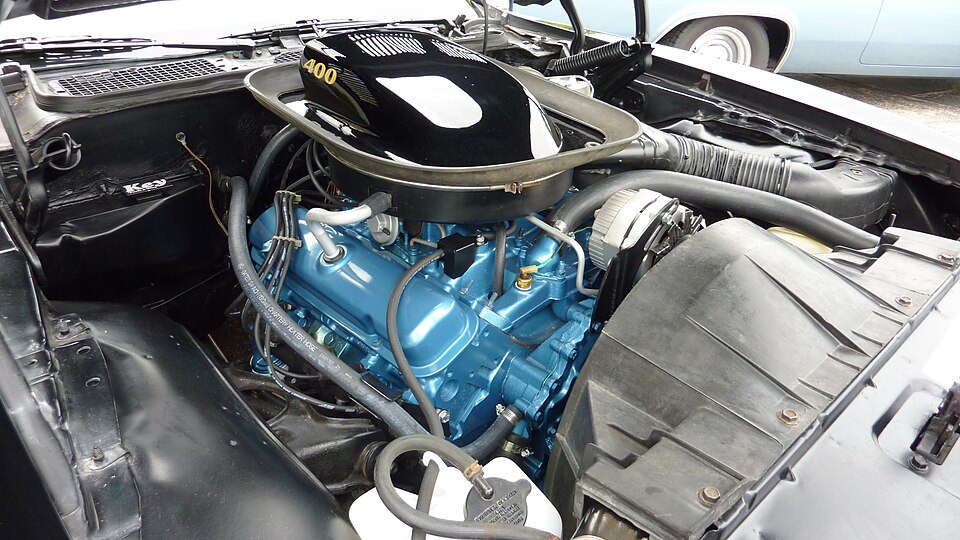
The W72 400 (RPO W72) was factory-rated at 220 horsepower at 4000 rpm. That is a 35-horsepower advantage over the 403. The W72 also used a performance-calibrated version of the Quadrajet carburetor, a specific camshaft grind, and tuning aimed at the enthusiast buyer. Its shaker scoop read "6.6 Litre T/A," the "T/A" designation distinguishing it from the standard 403 badge. The W72 was available with either the Turbo-Hydramatic 350 automatic or a four-speed manual transmission, Pontiac's only second-gen engine to offer that manual option in 1979.
The critical point for California buyers: the W72 400 was not certified for California sale. If you bought a 1979 Trans Am in California, the 403 was your top engine choice. The 301ci Pontiac V8 was listed as a third option, a genuine credit option where buyers received money back for choosing the smaller engine. The 301 was available nationally, not just in California, and it was rarely ordered anywhere. It is not accurate to call it a California-specific engine.
Period road tests at Car and Driver put the W72-equipped Trans Am in the mid-to-upper 6-second range for 0-60 mph runs. The 403 car ran closer to 8 to 9 seconds in similar conditions, depending on rear axle ratio, options, and ambient temperature. Both cars weighed around 3,600 pounds in typical trim, so the horsepower difference translated directly into measurable quarter-mile results rather than just paper figures.
Real-World Performance in the Context of 1979
Evaluating 185 horsepower fairly requires the right reference frame. In 1979, that figure was not embarrassing. Ford's Mustang Cobra with the 302ci V8 was rated at 140 horsepower. The Chevrolet Corvette's base 350ci L48 V8 made 195 horsepower. The Trans Am 403, while slower than the W72 version, was competitive with the broader sports car market of its era.
The Trans Am also carried the full WS6 suspension package as optional equipment in 1979, which included specific spring rates, stiffer shocks, a larger front anti-roll bar, and a rear anti-roll bar. WS6 was a handling and performance suspension option. Pairing a 403 car with WS6 produced a vehicle that handled well by 1979 standards even if the powerplant was not at the top of the performance ladder.
The shaker hood scoop on the 403 was functional. It drew air from above the hood surface, pulling cooler ambient air rather than the heat-soaked air inside the engine bay. This helped the 403 maintain consistent output across a wider temperature range than a sealed-box air cleaner would allow.
The 403 in the 1979 Special Edition Trans Ams
Two significant special editions were offered for the 1979 Trans Am, and both are regularly misunderstood in terms of which engine they received.
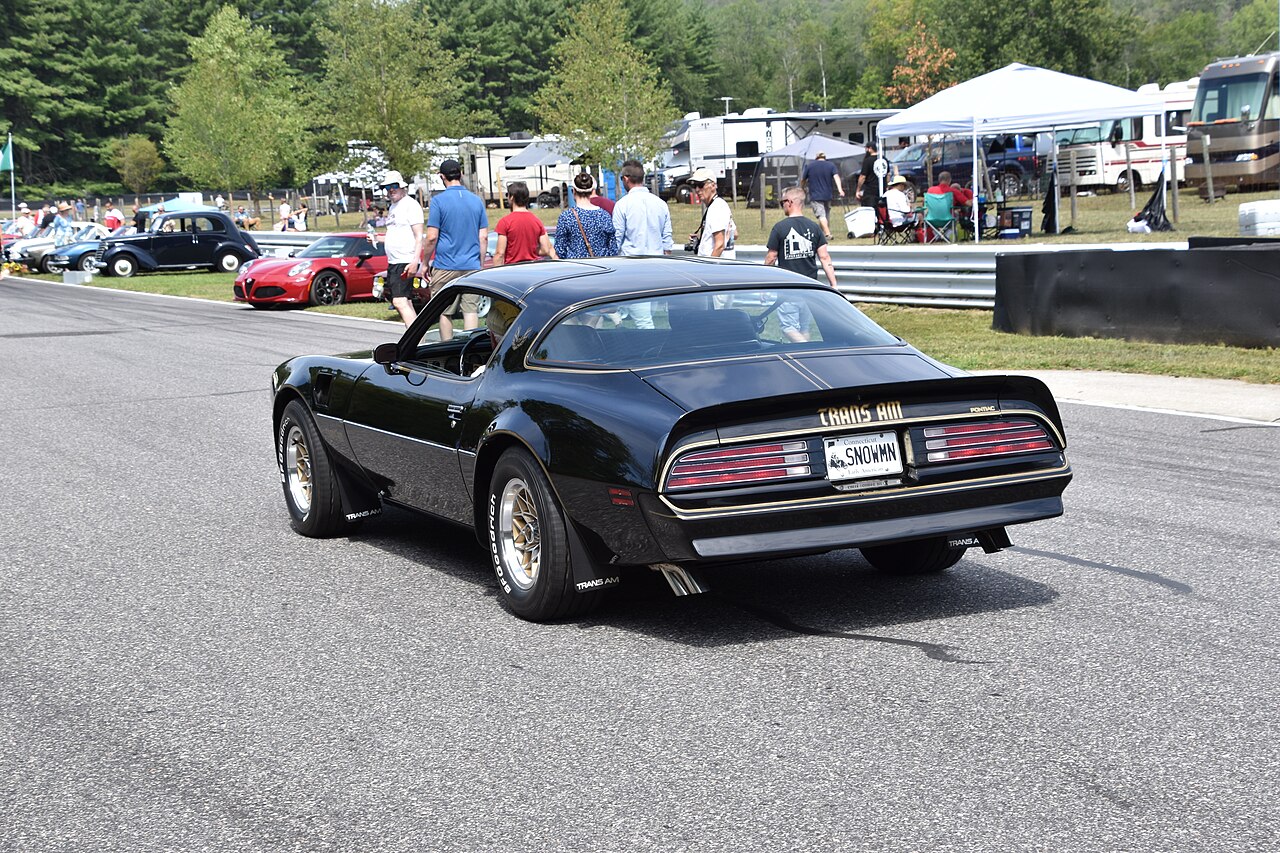
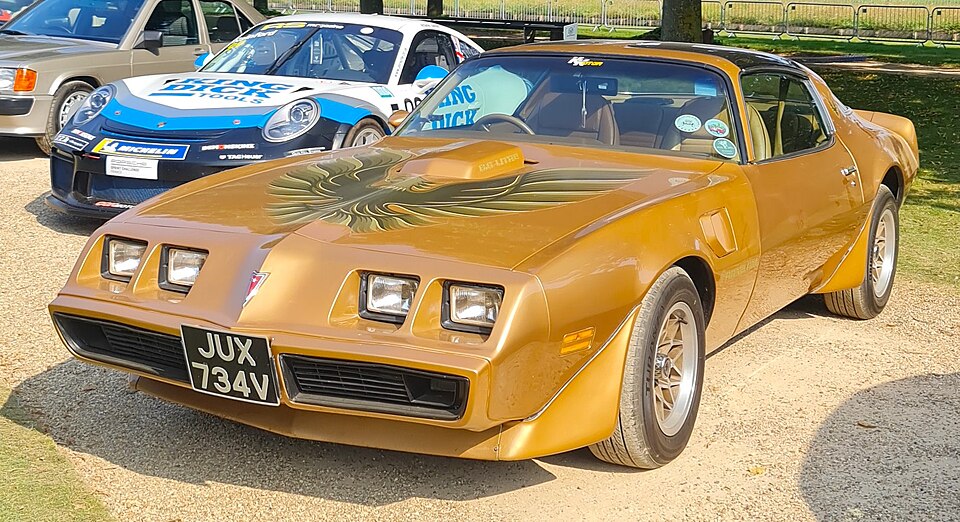
The Y84 Special Edition was the black-and-gold exterior package. It was not tied to a specific engine. A Y84 car could leave the factory with the 403, the W72 400, or the rare 301, depending on what the buyer ordered and which state the car was delivered in. The Y84 is a visual and trim package, not a performance specification.
The Y89 10th Anniversary Trans Am is a different story. Built to commemorate the Trans Am's tenth year, this model was produced in an approximate run of 7,500 units and came finished in Oyster White with Sterling Silver lower accents and silver graphics. It is also the only second-generation Trans Am that left the factory with leather-trimmed seats, finished in Platinum Silver Metallic. The 10th Anniversary car was available with either the 403 or the W72 400 depending on the buyer's state of residence, following the same California restriction that applied across the 1979 lineup.
Keeping a 403 Trans Am Accurate and Running
The 403 Oldsmobile V8 is a durable engine with broad parts support. It was used across numerous GM platforms through the late 1970s and shares components with other Oldsmobile V8 engines of the era. The key point for anyone maintaining or restoring one: the 403 uses Oldsmobile-pattern engine architecture. The intake manifold bolt pattern, cylinder head bolt pattern, and accessory mounting are all Oldsmobile-specific. Parts sourced for a Pontiac 400 or Chevy 350 will not cross over. Research has to reflect the correct division.
For factory-correct documentation, the 1979 Pontiac Firebird Service Manual is the primary technical reference covering both engines, their carburetor calibrations, and their wiring.