The phrase "1979 Trans Am colors by year" draws searches from restorers trying to match factory paint, buyers trying to authenticate a car they are considering, and enthusiasts mapping how 1979 fits within the full 1970-1981 second-gen color arc. The year has a more layered color story than most. Two option packages removed the buyer's choice of exterior color entirely. One of those packages produced the only second-gen Trans Am to leave the factory with leather seats. And the standard palette, while closely related to 1978, deserves a precise accounting for anyone working from a restoration or documentation standpoint.
Here is the complete breakdown.
The 1979 Trans Am Exterior Color Lineup
Pontiac offered the 1979 Trans Am in a range of exterior colors that reflected the late-1970s shift toward darker, more metallic finishes. The confirmed standard colors include:
Cameo White. A clean, bright white that paired well with the standard gold firebird hood graphic and contrasted sharply against black accent panels and trim.
Starlight Black. The darkest option in the lineup and the required exterior for the Y84 Special Edition package. Starlight Black was also available on standard Trans Ams independent of the package, with no mandatory graphics or trim obligations attached.
Martinique Blue. A medium blue metallic that gave the car a more restrained appearance relative to the vivid solid blues offered earlier in the second-gen run.
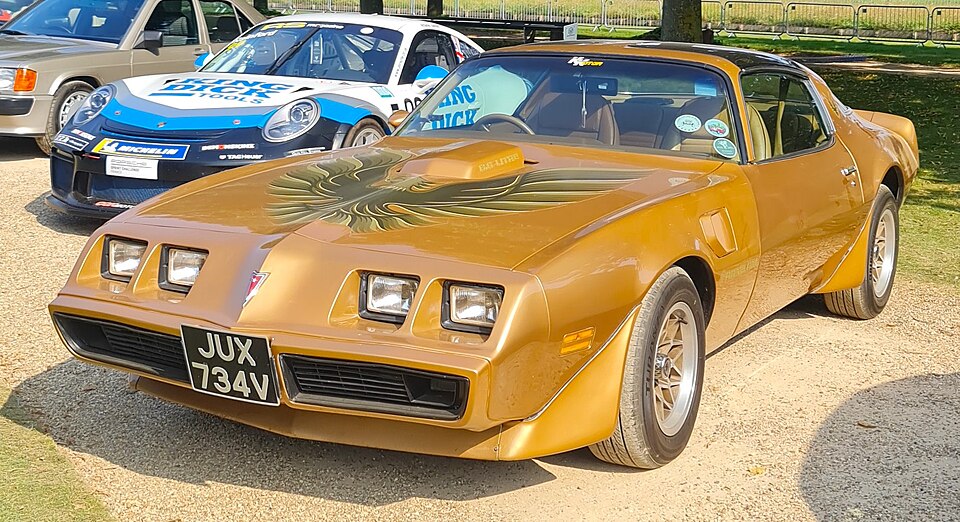
Solar Gold. A warm yellow-gold shade that worked naturally with the gold firebird graphic on the hood and connected visually to the black-and-gold aesthetic without requiring the full Y84 package.
Lombard Red. A medium red that appeared across multiple years of the second-gen color palette and remained a steady seller throughout the generation.
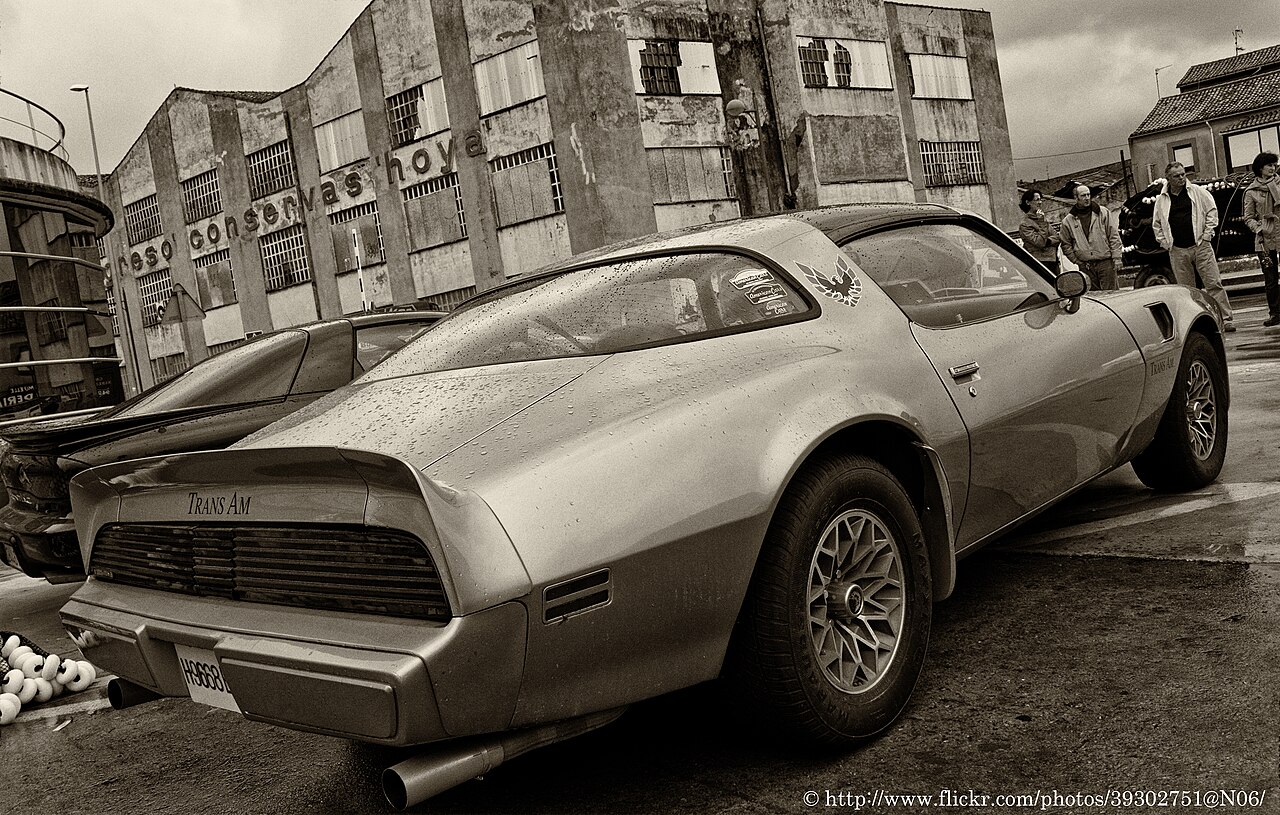
Platinum Silver Metallic. Available as a standard-palette color and as the mandatory exterior for the Y89 10th Anniversary package.
The broader Firebird line in 1979 may have included additional colors beyond those listed here, and Pontiac's option sheet sometimes allowed regional or dealer-specific variations. The 1979 Pontiac Firebird Factory Service Manual is the authoritative reference for the complete exterior color list with exact paint codes. Restorers matching paint to an original car should consult primary documentation rather than aftermarket guides, which vary considerably in accuracy.
Y84 and Y89: When Pontiac Made the Color Choice for You
Two 1979 Trans Am option packages imposed mandatory exterior colors. Both are central to the year's color story, and both come up constantly in buying and authentication conversations.
Y84 Special Edition
The Y84 package is the factory Bandit car. It required Starlight Black exterior with gold graphics, gold-painted mirrors, and the firebird on the hood rendered entirely in gold. Buyers who ordered Y84 had no exterior color decision to make: black and gold was the package, full stop. Interior options under Y84 were limited to choices that complemented the exterior, with Camel (a warm tan/gold tone) being the most commonly paired choice.
One clarification that matters for anyone researching these cars: the Trans Ams used in the filming of Smokey and the Bandit in 1977 were specially constructed vehicles, not standard production cars built on the regular Norwood assembly line. Standard 1977 Trans Ams share the styling direction but are not Bandit film cars. Pontiac introduced the Y84 as a production option in 1978, giving buyers a factory-correct version of the aesthetic, and continued it through 1979.
Y89 10th Anniversary Trans Am
The Y89 package marked ten years of the Trans Am nameplate. Its exterior was Platinum Silver Metallic, and no alternative was offered. The hood graphic, ground effects striping, and trim details were executed in silver and charcoal rather than the gold used on standard Trans Ams, giving the car a visually distinct identity from every other 1979 on the lot.
The Y89 interior used silver leather-trimmed seats. This is the only factory leather interior in the entire 1970-1981 second-gen run. Every other Trans Am and Firebird of this generation received vinyl seats. That distinction is not a minor footnote: if someone presents a 1978, 1980, or any other year Trans Am with a claim of factory leather, either the seats have been replaced or the car has been misidentified. The Y89 is the exception, and it is the only one.
Production of the Y89 package is documented in Pontiac hobby literature at approximately 7,500 units, a figure consistent with what owner registries and club documentation have tracked over the decades. T-tops were included in the Y89 package, and the combination of silver paint, charcoal graphics, and roof glass panels gave the car a finished appearance that justified the premium Pontiac charged for it.
How 1979 Fits the Second-Gen Color Timeline
To fully address the "by year" dimension of this topic, some context on how the second-gen palette evolved across the full 1970-1981 run helps place 1979 correctly.
The earliest second-gen Trans Ams (1970-1973) reflected the muscle car era's appetite for high-visibility finishes. Colors like Lucerne Blue, Orbit Orange, and Cameo White characterized those cars. The Trans Am was a low-production performance model in this period, and the color choices reinforced that identity.
Through 1974-1976, the palette evolved as Pontiac worked within tighter emissions and fuel economy constraints. Performance credentials became harder to advertise in straightforward terms. The colors shifted to reflect a market in transition, though the Trans Am continued to stand visually apart from base Firebirds.
By 1977, Starlight Black had taken on cultural weight it had not carried in earlier years, driven largely by the release of Smokey and the Bandit that summer. The film did not create a new color. Starlight Black had been available on Trans Ams before 1977. What the film did was attach strong cultural associations to one color choice that persisted for the rest of the generation.
In 1978, Pontiac formalized the black-and-gold aesthetic with the Y84 Special Edition as a production option. The 1978 and 1979 color palettes run closely parallel, with 1979 adding the Y89 10th Anniversary package as its defining distinction.
The 1980 and 1981 model years moved the generation toward its close. Turbocharged engine options, revised graphics packages, and a palette in transition reflected Pontiac preparing for the third-generation Firebird that would arrive in 1982. The late colors are interesting in their own right but lack the concentrated cultural moment that 1979 represents.
The 1979 model year sits at the peak of the second-gen's commercial and cultural momentum. Sales were strong. The Bandit connection remained fresh. And the 10th Anniversary package gave Pontiac a genuine milestone to put in front of buyers. No single year in the second-gen run has a more distinct color story.
Interior Colors and the 1979 Seat
The standard 1979 Trans Am interior came in several color options:
Black. The most versatile choice, and the one most commonly paired with Starlight Black exteriors on cars ordered without the Y84 package.
Camel. A warm tan/gold interior tone that worked naturally with the Y84's exterior treatment and held up well against a range of other exterior colors.
Carmine. A red interior available with compatible exterior color combinations.
Midnight Blue. A dark blue interior for cars ordered in blue exterior tones.
The Y89 10th Anniversary interior stood entirely apart from these options. Silver leather-trimmed seats and a silver-toned cabin made it unlike anything else Pontiac built in the 1979 Firebird line.
The seat in all standard 1979 Trans Ams was the Deluxe Bucket. This was standard Trans Am equipment for 1978 through 1981, not an upgrade or a separate option. It featured a firmer bolster structure and more tailored vinyl upholstery than what appeared in earlier second-gen Trans Ams, representing a meaningful step up in cabin refinement that the factory delivered across the board, regardless of which exterior color a buyer chose.