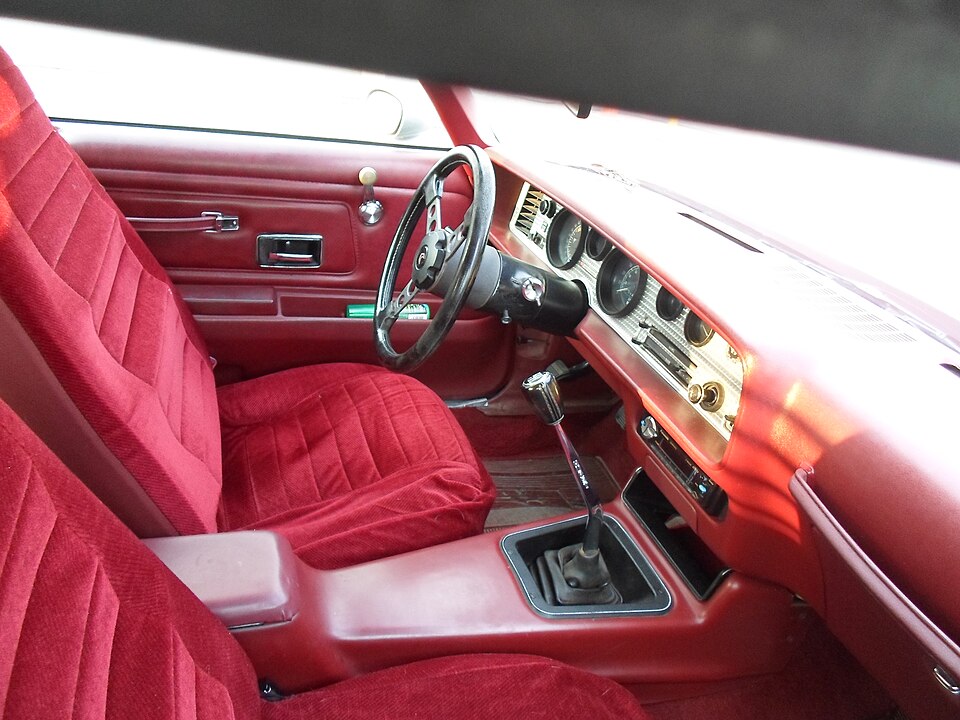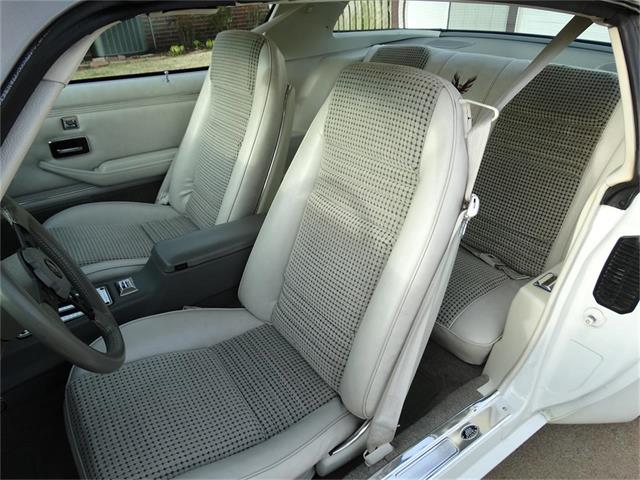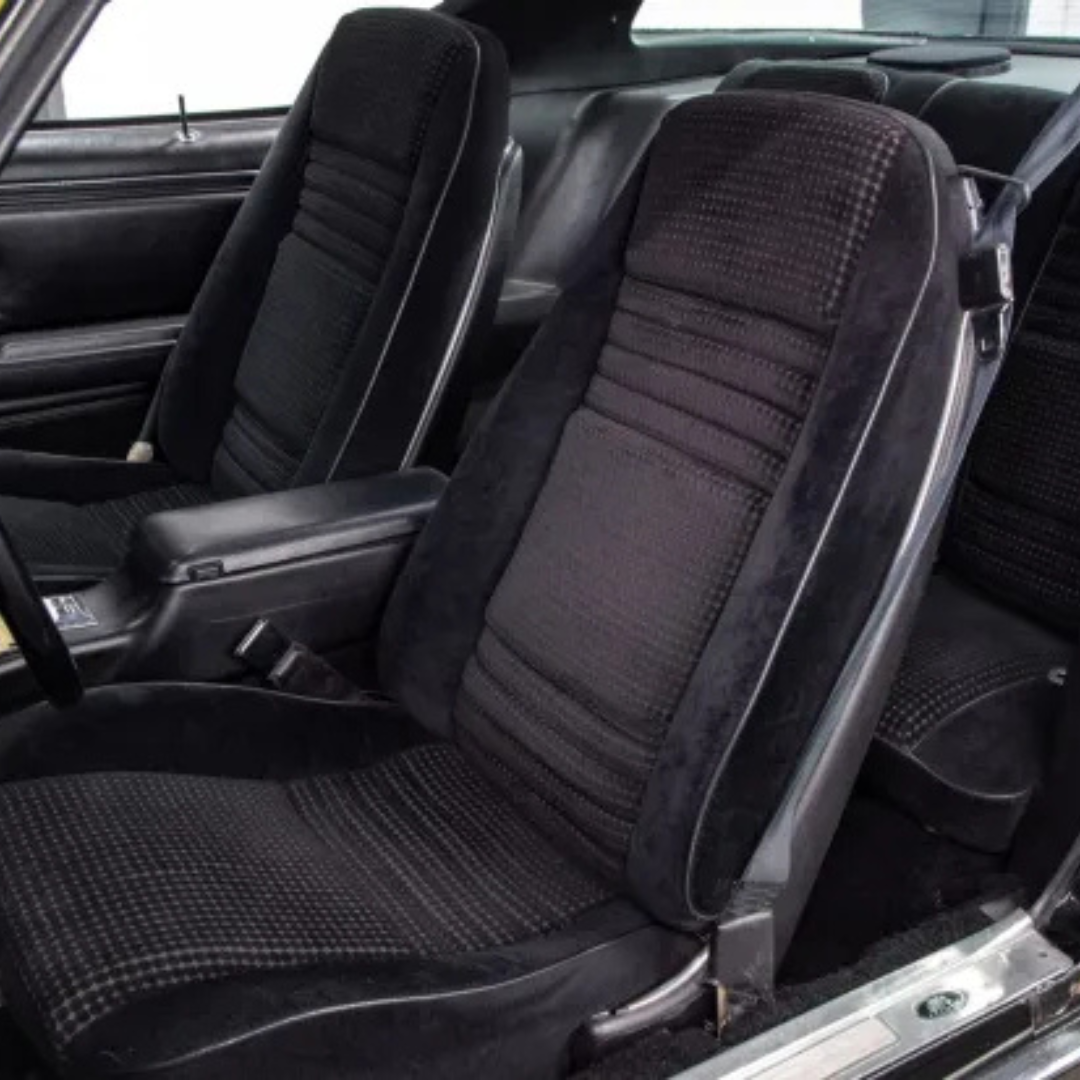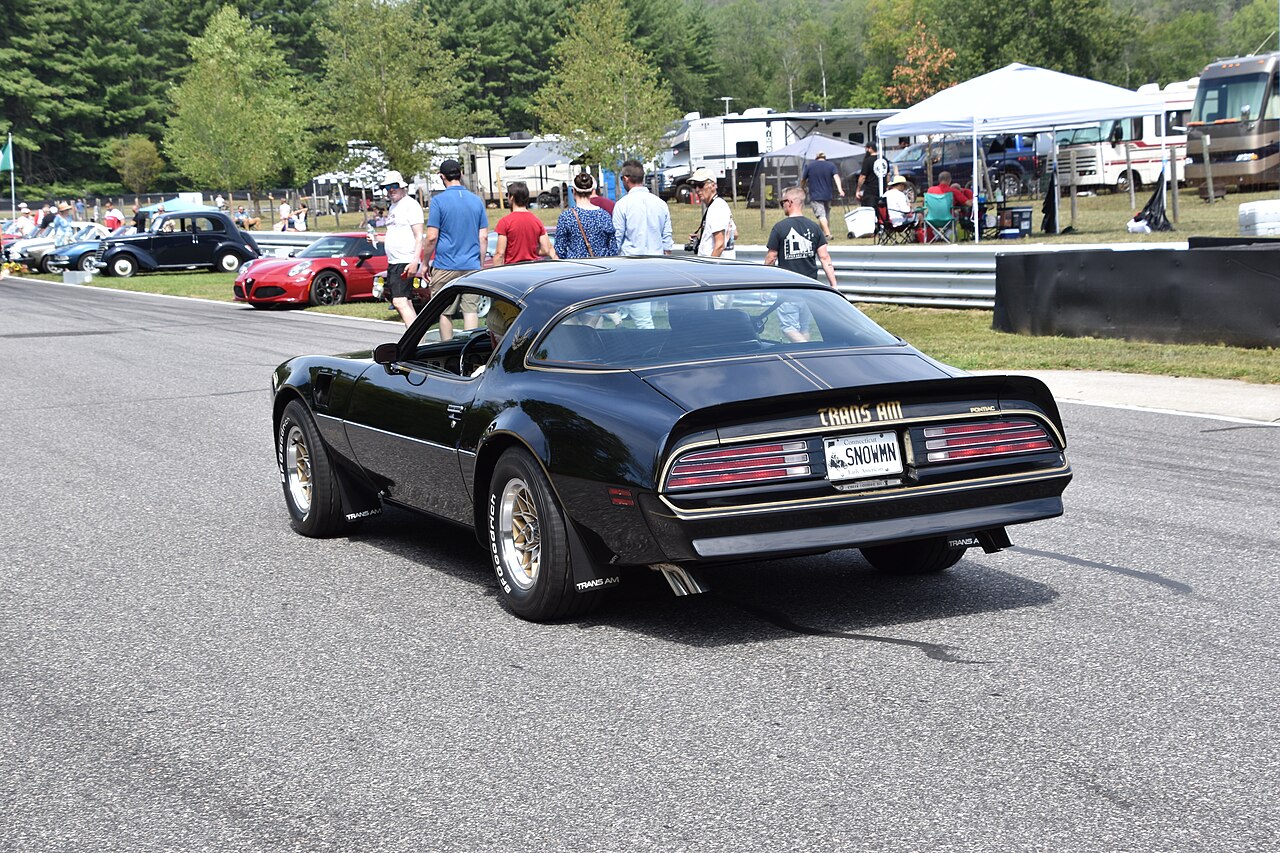
Tracking down your exact firebird interior color codes by year is step one in any honest second-gen restoration. Order the wrong seat covers or carpet and you are either living with a near-miss or pulling everything back out and starting over. This guide covers how to locate and read the trim code on your car, what colors Pontiac offered across the full second generation, and how factory option packages constrained or changed those choices.
How to Find and Read Your Firebird Trim Tag
Second-gen Firebirds (1970-1981) carry their interior specification on two separate factory documents. The first is the Pontiac cowl data plate, a metal tag riveted to the firewall. It shows the vehicle's paint code, basic option codes, and a trim designation. The second is the Fisher Body Service Parts Identification tag, a paper label typically adhered to the rear floor pan under the front passenger seat, though location can vary between production runs. On cars that have been heavily detailed or restored previously, this tag is sometimes missing entirely. If yours is gone, your original broadcast sheet is the next best primary source.
The trim code itself is a two or three character alphanumeric entry. On the Fisher Body tag it appears in the "TR" or "TRIM" field. The code identifies both the interior color and the material, which in second-gen Firebirds is vinyl in all but one case (covered below). When ordering reproduction interior parts from a supplier, this code is what you give them, not the color name.
Color names are informal shorthand. Suppliers and restorers use them to communicate, but they are not the factory specification. Two cars from different model years might share the same informal color name but carry different trim codes because the shade, texture, or insert pattern changed between years. Always cross-reference your code against the assembly manual or Fisher Body reference for your specific year. The Pontiac-Oakland Club International (POCI) publishes judging guides and maintains documentation resources that include year-specific trim code tables, and their materials are among the best organized factory-level references available to restorers.
Firebird Interior Colors by Year (1970-1981)
The color palette available to Firebird and Trans Am buyers shifted with nearly every model year. The range was widest in the early second generation and narrowed substantially as the 1970s progressed.
1970-1973: The Widest Selection
Early second-gen Firebirds offered the broadest interior color range of the entire generation. Depending on the model (base Firebird, Esprit, Formula, Trans Am) and the specific year, buyers could choose from combinations of Black, Blue, Gold, Ivory, Red, and Saddle. Green appeared on some configurations in the early years and was phased out by the middle of the decade. All factory seats in this period were vinyl.
The trim code format during this era used a two-digit numerical system. A Black interior from a 1971 Firebird carries a different code than a visually similar Black interior from 1973, because the seat construction and trim insert patterns changed between those years. Buying "1970-1973 black interior" parts as a group without confirming the exact year code can result in mismatched textures or incorrect seat patterns.
1974-1977: The Palette Contracts
Green was effectively gone from the Firebird option sheet by 1974. Available colors consolidated around Black, Buckskin (a warm tan-gold), Blue, and a red family Pontiac called Oxblood in some years and Firethorn in others. White or Ivory remained available on certain configurations through portions of this period but was not offered universally across every year or every model.
The Y84 Special Edition package was available across several years of the second generation and paired a black exterior with gold graphics. This is the package associated with the Smokey and the Bandit films, though the cars used during production were specially built vehicles and not standard production Trans Ams. Y84 came with a specific interior combination built around black. If you are restoring a Y84 car, pull the trim code directly from your Fisher Body tag rather than assuming any standard black interior code applies, as the Y84 package carried specific trim details.
1978-1981: The Deluxe Bucket Years
For 1978, the Trans Am received the Deluxe Bucket seat, which is standard equipment on these cars, not an optional upgrade. Through the 1978-1981 model years, the interior color range settled into Black and Camel (a warm tan) as the two most commonly available choices. Midnight Blue was offered during portions of this window, and Firethorn Red appears in some model years, but neither was consistent across all four years. Check your year-specific documentation before assuming any color beyond Black and Camel was offered for your car.
The one significant exception to the vinyl rule across all of second-gen production is the 1979 10th Anniversary Trans Am (RPO Y89). These cars came from the factory with silver leather-trimmed seats in Platinum Silver Metallic and are the only second-gen Firebirds to have left the factory with leather. If a car is represented as having a factory leather interior and it is not a documented Y89, that interior was not original to the vehicle.
Special Packages and Their Interior Implications
WS6 was a suspension, steering, and wheel-and-tire performance package. It had no effect on interior color availability. It is not an interior option and was never associated with a specific interior code.
Y84 Special Edition (black exterior, gold graphics) came with a defined interior combination centered on black. Buyers of Y84 cars did not choose their interior color from the open option list the way a base Firebird buyer could.
Y89 (1979 10th Anniversary Trans Am) offered no interior color choice. Silver leather was the only interior fitted to these cars. Production was intentionally limited, making these among the more documented and scrutinized cars in the second generation. A verified Y89 should have full factory documentation to support the leather interior claim.
For Formula Firebirds, interior color availability generally tracked the broader Firebird catalog rather than the Trans Am-specific list. In years where the Trans Am had the Deluxe Bucket and the Formula carried a different seat, the trim codes will differ even if the color name sounds identical.
Sourcing the Right Interior Parts for Your Color Code
Once you have the trim code from your Fisher Body tag or broadcast sheet, a reputable restoration supplier can cross-reference it to the correct replacement components. This covers seat covers, door panels, carpet, headliner material, and console padding. The code ensures you receive the right shade and the correct texture pattern for your specific year.
When placing an order, provide the trim code directly rather than a color name. "Camel" and "Buckskin" are both used informally in the hobby to describe tan interiors, and different suppliers use those names to describe different years and specifications. The code eliminates that ambiguity.