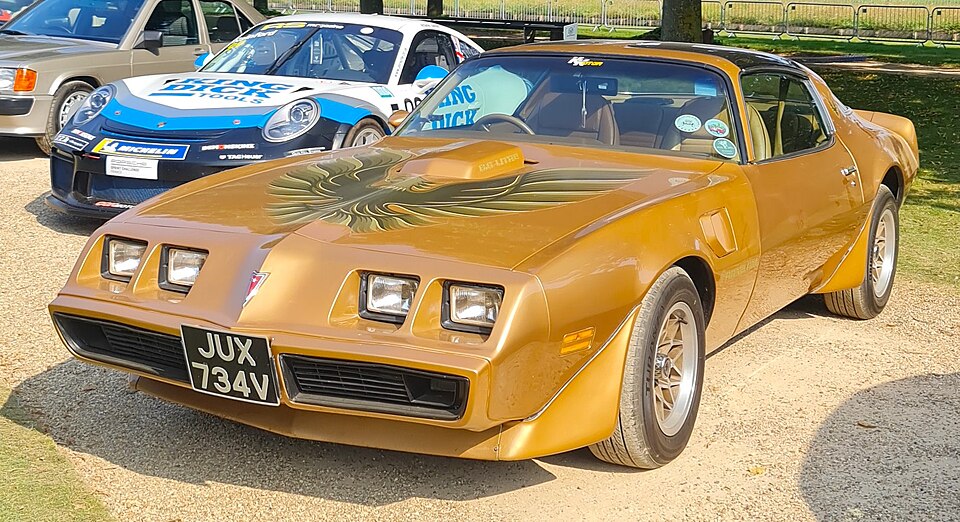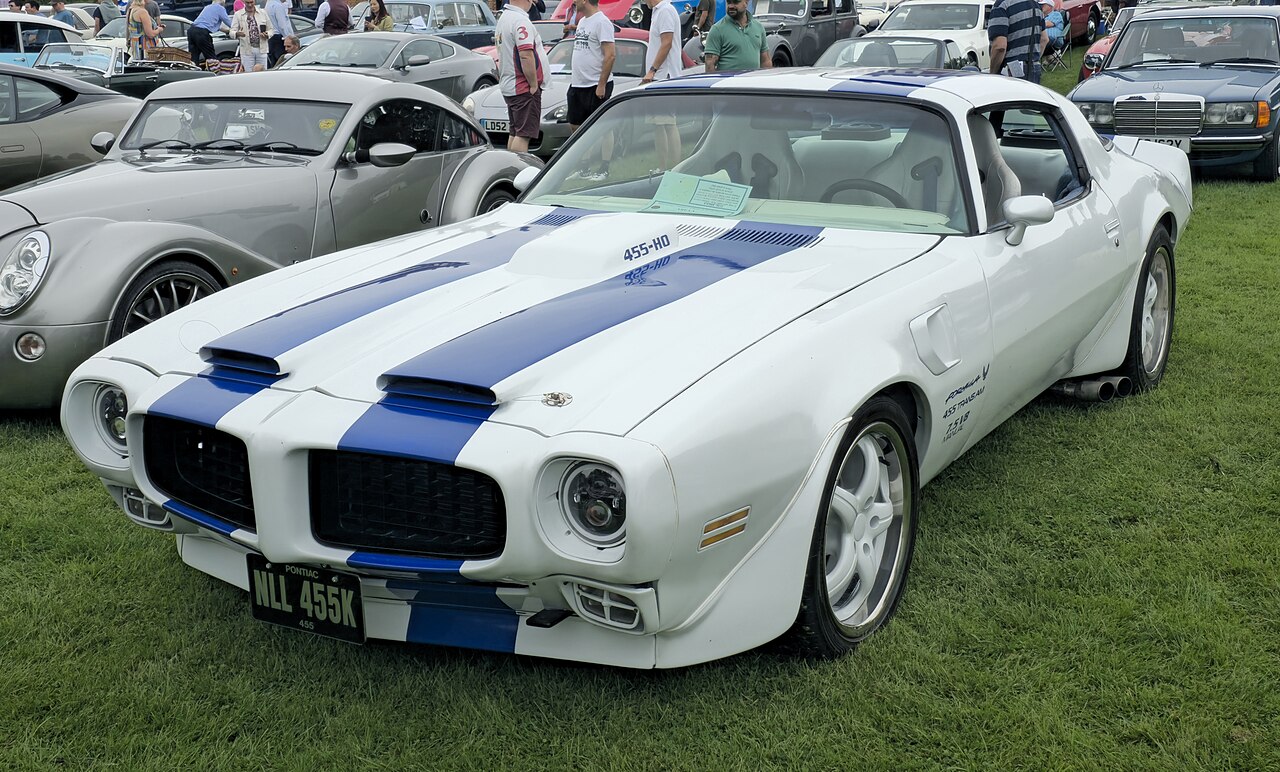
The question comes up constantly: how fast is a 1979 Trans Am, and can it still hold its own? The answer depends almost entirely on which engine is under that fiberglass hood. Pontiac offered three different V8 powerplants for the 1979 model year, and the performance gap between the bottom and top of that range is large enough to change how the car behaves at the strip and on the street.
The 1979 Trans Am Engine Lineup
Three V8 options were available for the 1979 Trans Am, and they were not created equal.
The standard engine was the 403 cubic inch Oldsmobile-sourced V8, displacing approximately 6.6 liters. By the late 1970s, Pontiac was drawing on GM's corporate engine pool, and the 403 was the reliable workhorse that went into the majority of 1979 Trans Ams. It carried a factory rating of 185 horsepower at 3600 rpm and 320 lb-ft of torque. The 403 was also the mandatory engine for any Trans Am delivered new in California, because the W72 400ci did not receive California emissions certification.
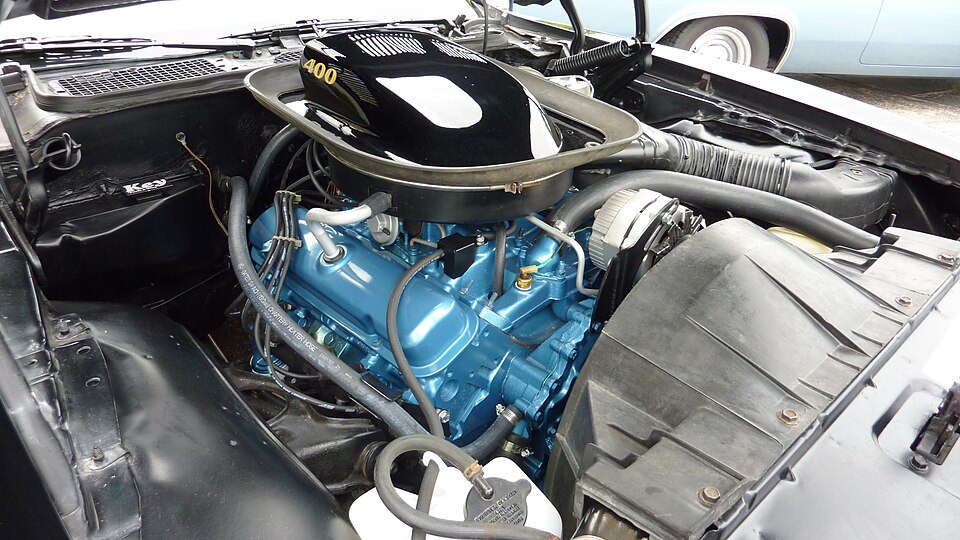
The W72 option was what performance buyers ordered. This was Pontiac's own 400 cubic inch V8, badged as the T/A 6.6, and tuned specifically for the Trans Am. It carried a factory rating of 220 horsepower at 4000 rpm and 320 lb-ft of torque. The W72 received a more aggressive camshaft grind, a performance-calibrated Rochester Quadrajet four-barrel carburetor, and a cold air induction system. Compression was set at the upper limit achievable on regular unleaded fuel while still meeting federal emissions requirements. The W72 cars wore a "T/A 6.6" badge on the hood; 403 cars simply said "6.6 Litre." From a distance the hoods looked similar, which created real confusion for buyers at the time.
The 301 cubic inch Pontiac Turbo-Fire V8 was available as a rare credit option. It produced considerably less power than either the 403 or the W72 and was not ordered by buyers who wanted performance. Most 1979 Trans Am buyers who needed to control costs chose the standard 403 car rather than the 301.
Both the 403 and W72 were backed by a Borg-Warner 4-speed manual transmission, available in close-ratio or wide-ratio form, or a Turbo-Hydramatic automatic. Factory production leaned toward the automatic, but the 4-speed is the right choice for anyone who drives these cars hard today.
Quarter-Mile Times and 0-60 Figures
Period road tests remain the most honest source for real-world performance numbers on a stock 1979 Trans Am. Results varied by transmission choice, axle ratio, altitude, ambient temperature, and the test driver, so the figures below represent realistic ranges rather than guarantees.
With the W72 400ci engine: - 0 to 60 mph: approximately 7.4 to 8.2 seconds - Quarter mile: approximately 15.5 to 16.2 seconds at 88 to 92 mph
With the standard 403ci engine: - 0 to 60 mph: approximately 8.5 to 9.5 seconds - Quarter mile: approximately 16.5 to 17.2 seconds at 82 to 86 mph
These figures align with period testing documented by automotive publications and preserved in historical coverage such as the archive maintained by Hemmings Motor News.
The W72 was a meaningful step above the 403 in straight-line performance. A full second in the quarter mile is a genuine gap, and it was perceptible on the street. In the context of 1979, when emissions rules and fuel economy pressure had squeezed output from nearly every American V8, a W72 Trans Am running the mid-15-second range was among the faster domestic production cars on sale.
The 301ci car ran noticeably slower than either alternative. It was not purchased for performance and is not relevant to this discussion beyond acknowledging it existed.
What the W72 Package Actually Included
The W72 was not a marketing badge on a standard engine. It was a complete performance calibration of the 400ci V8. Beyond the high-output block, the package specified a Rochester Quadrajet carburetor set up for performance rather than economy, a camshaft with more lift and duration than the base application, and a cold air induction system that brought cooler outside air to the carburetor rather than drawing from the hot underhood environment.
Axle ratio selection mattered with the W72. Performance rear axle ratios in the 3.08:1 to 3.23:1 range worked with the engine's torque curve to produce noticeably stronger launches than an economy-ratio 403 car. A W72 with the right axle ratio and the close-ratio 4-speed is the combination that produces the upper end of the quarter-mile figures listed above. The same W72 with a wide-ratio automatic and a taller axle runs a bit slower.
If you are evaluating a 1979 Trans Am today and want to confirm W72 authenticity, the broadcast sheet and the Protect-O-Plate are the primary references. The partial VIN stamped on the engine block also confirms what engine the factory installed. Visual badges can be swapped; factory paperwork cannot.
The 10th Anniversary Trans Am (Y89) and Its Performance
The 1979 model year marked the Trans Am's tenth birthday, and Pontiac recognized it with the Y89 10th Anniversary Trans Am. This special edition came finished in Platinum Silver Metallic with silver and charcoal graphics. Hurst-Hatch T-tops were standard equipment. The Y89 also included the only factory leather interior ever fitted to a second-generation Pontiac Trans Am or Firebird. Silver leather-trimmed seats were unique to the Y89; every other 1970-1981 Trans Am and Firebird seat was vinyl.
On the powertrain side, the Y89 could be ordered with the W72 400ci engine, making W72 versions of the 10th Anniversary car both the most visually striking and the quickest configuration