Sourcing Pontiac Firebird restoration parts for the second generation (1970-1981) is a more manageable project today than it was fifteen years ago. Reproduction suppliers have expanded their catalogs considerably, NOS inventory still surfaces through swap meets and marque clubs, and the F-body architecture shared with the Camaro means certain structural and mechanical components carry useful overlap. The real skill is knowing which parts are Firebird-specific, which interchange with Camaro pieces, and which require hunting through specialty channels. This guide walks through every major category and tells you what to watch for in each.
Start with the Broadcast Sheet, Not the Parts Catalog
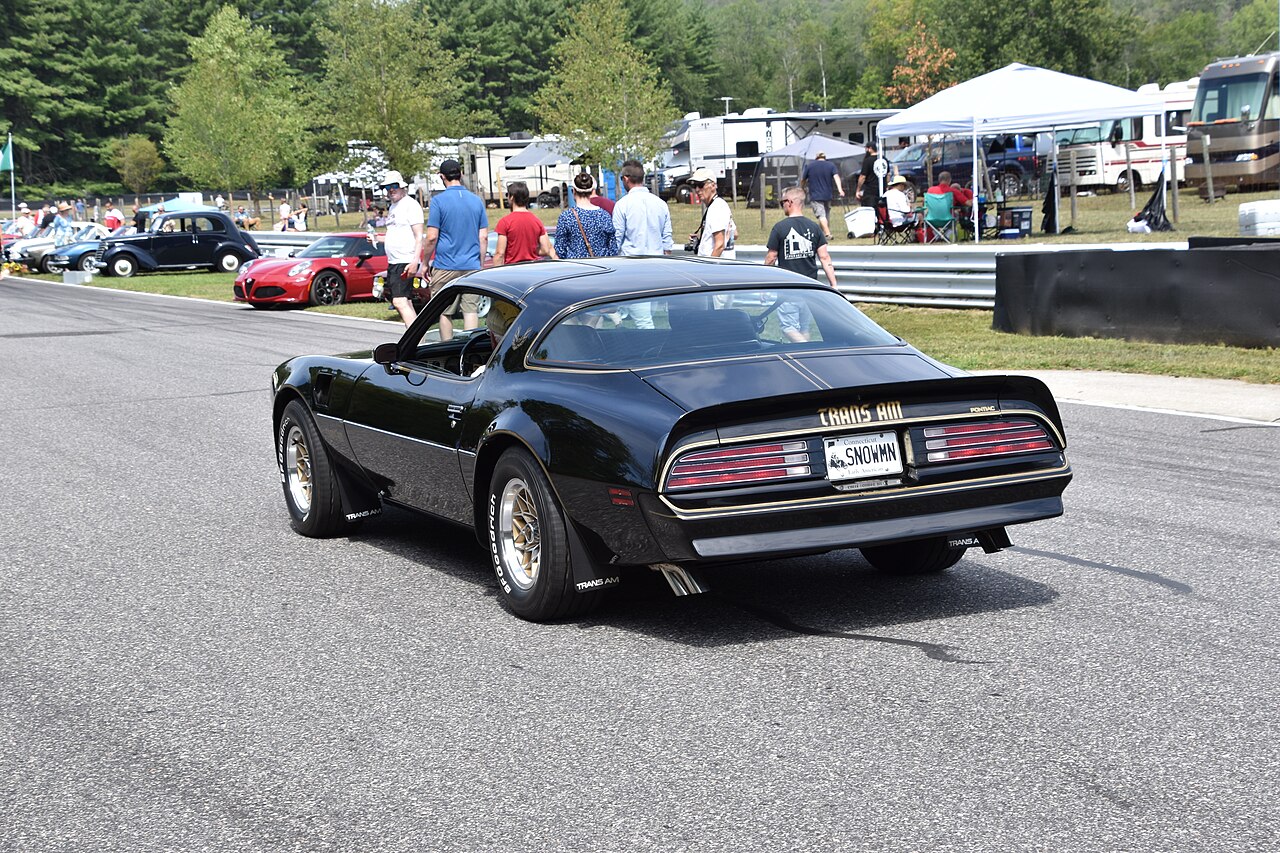
Before ordering anything, locate your car's broadcast sheet. GM printed these production documents and placed them inside the cars during assembly. Common hiding spots are under the rear seat cushion, folded under the front carpet, and in the trunk. The broadcast sheet records every factory option, including interior color and trim codes, engine and transmission codes, and packages like WS6 (the handling and performance suspension package) or Y84 (the Special Edition black-and-gold exterior package).
Ordering parts without verified trim codes leads to mismatches. Interior door panels varied across multiple colors within a single model year, and parts from one year frequently do not share part numbers with the next. The 1979 interior offerings, for example, do not carry cleanly forward to 1980 pieces. Getting the codes right before you click checkout saves return shipping and prevents the experience of pulling a door panel out of the box and finding it is the wrong shade.
If the broadcast sheet is missing or unreadable, the Pontiac Oakland Club International maintains decoding resources and a membership that can help you work backward from a partial VIN and whatever documentation survives with the car.
Body and Sheetmetal: Where Most Budgets Concentrate
Rocker panels, quarter panels, floor pans, and trunk floors are the four areas that rust attacks hardest on second-gen Firebirds. These cars are now between 44 and 55 years old, and even cars from dry climates often show at least seam rust in the floor. Salt-belt cars can have significant structural damage.
Reproduction sheetmetal covers the most common repairs reasonably well. Rocker panel sections, floor pan sections, and trunk floor patches are stocked by major suppliers. Full quarter panels are harder to find as quality reproductions and represent the largest single sheetmetal expenditure for most builds.
The front clip is another area with decent reproduction coverage. The Trans Am-specific hood with twin functional scoops is a different stamping from the standard Firebird hood, so confirm your car's configuration before ordering. The 1970-1973 body style also differs substantially from the 1974-1981 facelift, and nearly every exterior panel is year-range specific. Never assume a 1972 fender fits a 1976 car.
Weatherstripping is well covered across the second-gen span. Door seals, T-top seals, windshield seals, and rear window seals are all available as reproduction pieces. T-top seals deserve special attention: failed seals allow water intrusion that accelerates rust in the sail panels and saturates carpet and interior foam. Replace them during any restoration even if they look serviceable, because aged rubber loses compression seal properties long before it visibly deteriorates.
Interior Restoration Parts
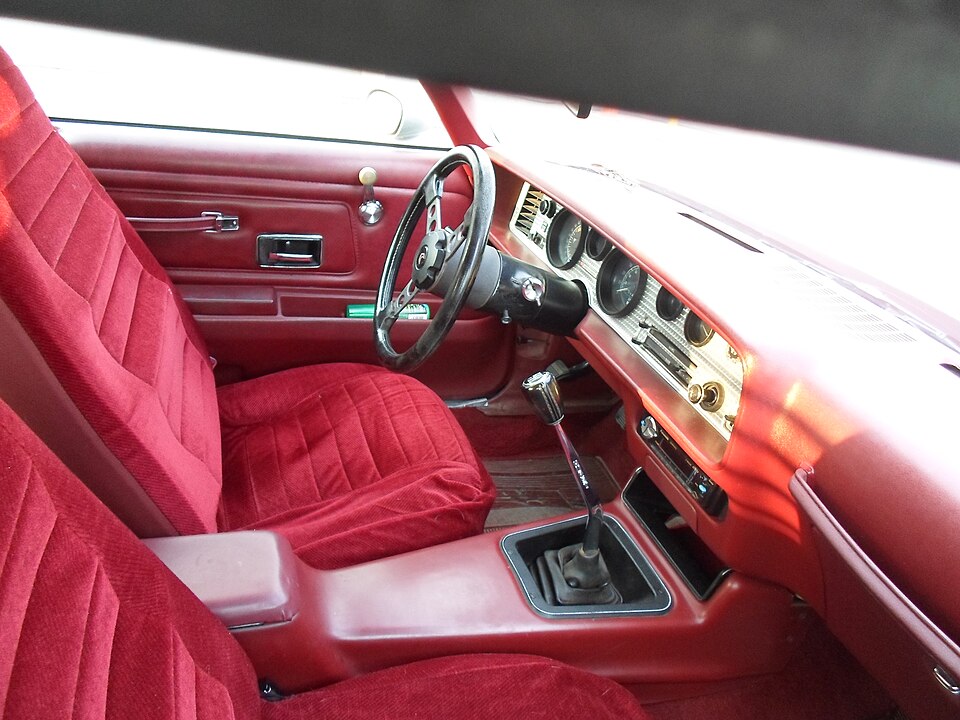
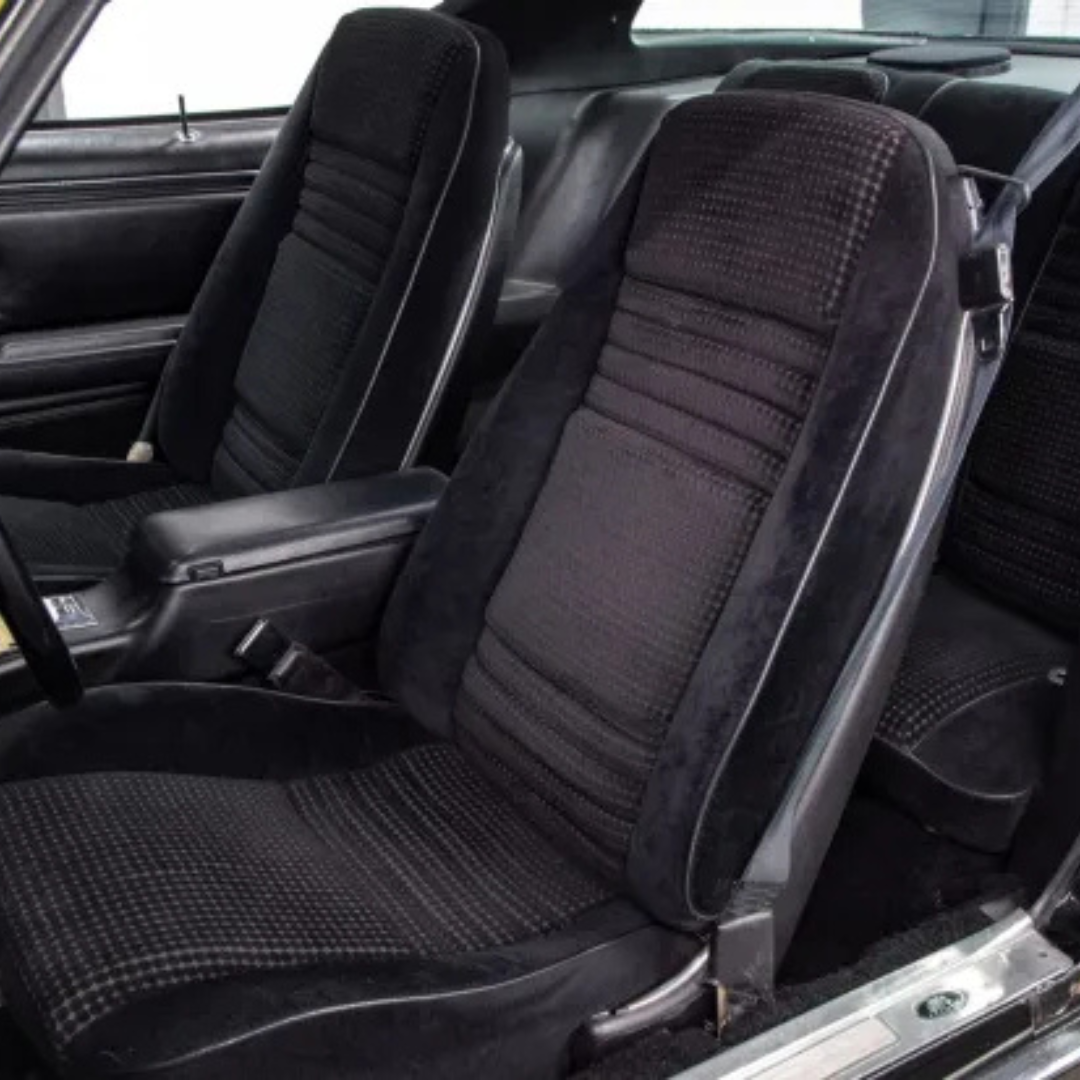
Second-gen Firebird and Trans Am interiors used vinyl seat upholstery as the factory standard across all trim levels. The deluxe bucket seats were standard Trans Am equipment. Reproduction seat covers are available in the major factory colors and should replicate the original grain pattern and perforation layout when sourced from a quality supplier. When comparing options, ask specifically whether the supplier's cover matches the original grain, since some lower-cost covers use a generic vinyl that looks wrong next to surviving original pieces.
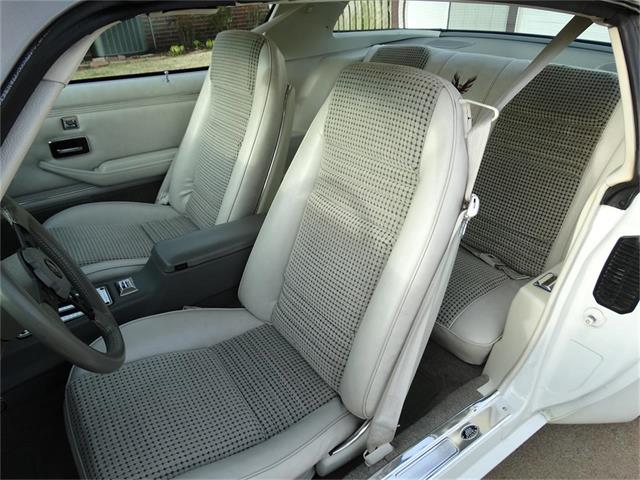
One critical exception to the vinyl standard applies to the 1979 10th Anniversary Trans Am, coded Y89. That car came with silver leather-trimmed seats as part of its Platinum Silver Metallic appearance package and is the only second-gen Firebird to leave the factory with leather upholstery. If you are restoring a Y89, confirm the seat material before ordering any reproduction covers.
Molded carpet sets are one of the more straightforward interior parts to source. Reproduction sets replicate the factory loop pile and are available in the major interior color codes. Confirm whether your car has a floor console or a bench-seat floor plan before ordering, because the carpet cuts differ. Also note whether the original car was a manual or automatic, since the transmission tunnel area is shaped differently.
Door panels exist as reproductions for most second-gen years, though quality varies. Examine the grain texture, the armrest pad material, and the speaker grille pattern against your original before committing to a supplier. Interior trim codes matter here too, since some years used panel insert colors that do not match panels from an adjacent model year.
Dashboard restoration is where costs climb. Cracked dash pads are nearly universal on cars that have spent time in sun-heavy climates, and quality replacement pads are harder to find than carpet or door panels. Some restorers send cracked originals to foam-injection and re-skinning specialists. Others source used pads from cars with documented storage histories or low sun exposure. Gauge clusters with worn faces or failed backlighting are rebuildable, and several specialists focus specifically on second-gen Pontiac instrument clusters.
Mechanical and Drivetrain Parts
The mechanical side of a second-gen restoration benefits from the car's GM parentage. Many suspension and brake components were shared across the GM lineup, which gives these cars better parts availability than a low-volume specialty vehicle.
Suspension components including control arms, ball joints, sway bars, and spindles are well supported by both reproduction suppliers and the broader GM parts ecosystem. If you are restoring a documented WS6 car, verify the correct sway bar diameters and shock specifications before substituting standard Trans Am components, since WS6 used specific rates that are not interchangeable with the base setup.
Brakes follow a similar pattern. Front disc and rear drum was the standard configuration for most second-gen cars, and replacement rotors, calipers, and wheel cylinders are widely available. Four-wheel disc was an option, and sourcing for those cars requires more attention.
Engines are where research becomes essential. The 400 cubic inch Pontiac V8 was the performance core of the Trans Am for most of the generation. The 455 Pontiac was available through the mid-1970s as the top displacement option. By 1979, the Olds-sourced 403 became the standard Trans Am engine in most markets, with the 400 W72 available as the performance upgrade and a 301 cubic inch Pontiac offered as a credit option. For 1980 and 1981, the Pontiac 301 and the Chevy 305 were the available configurations as production wound toward the end of the generation.
Genuine Pontiac 400 and 455 blocks are increasingly scarce. Rebuilt cores exist, but verify casting numbers against documented references before purchasing any engine described as original. The Pontiac Oakland Club International and its affiliated registries maintain casting number databases that are essential for engine verification work.
Transmissions, including the Turbo-Hydramatic 350 and 400 automatics and the Borg-Warner four-speed manuals, are all rebuildable with currently available parts, and rebuilding specialists focus specifically on these units.