The question of trans am deluxe vs standard interior trips up restorers more often than almost any other spec issue. Ordering the wrong door panels is an expensive mistake, and both trim levels look similar in low-resolution photos. Before you put anything on a credit card, you need to know exactly which interior configuration your car left the factory with and what the differences actually are.
What the Standard Trans Am Interior Actually Included
The Trans Am was the performance flagship of the Firebird lineup throughout the second-gen run from 1970 to 1981. That position meant the base Trans Am interior was already better-equipped than a base Firebird or a Formula, and it is worth understanding what "standard" meant within the Trans Am itself.
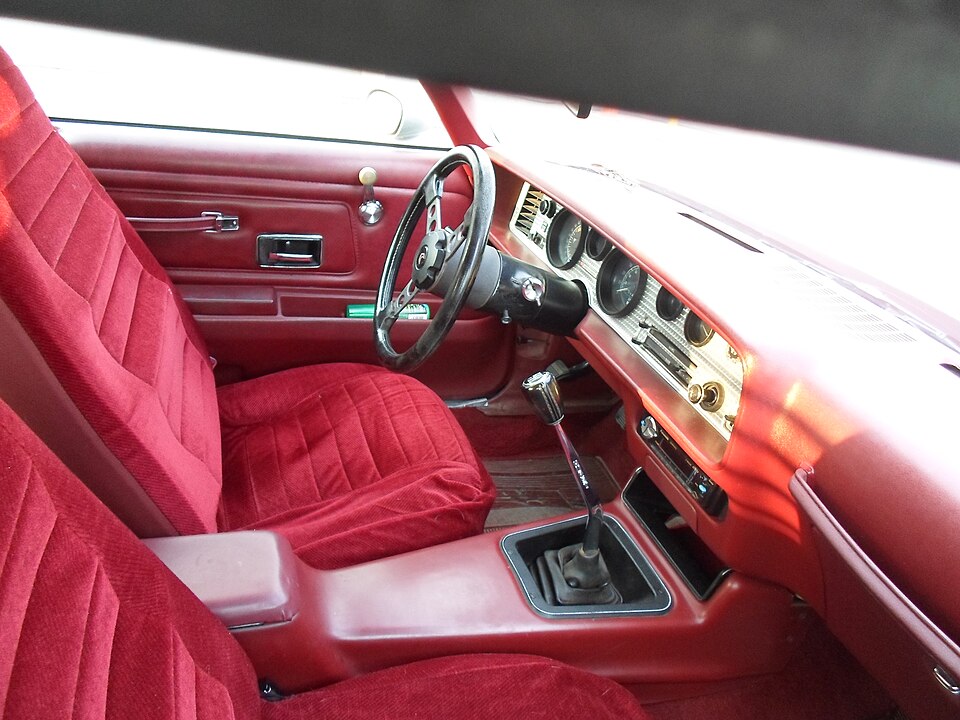
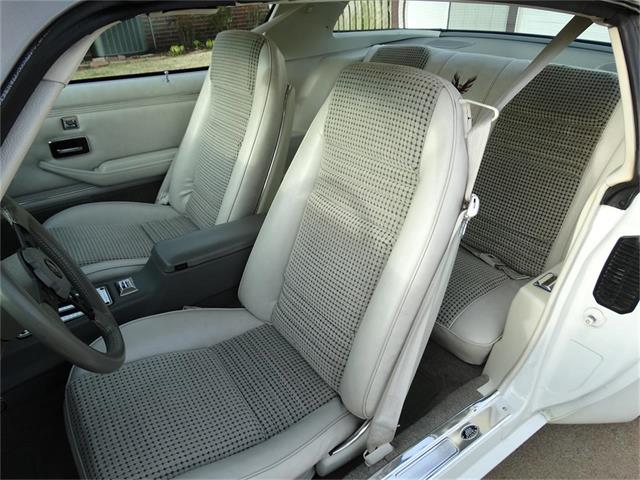
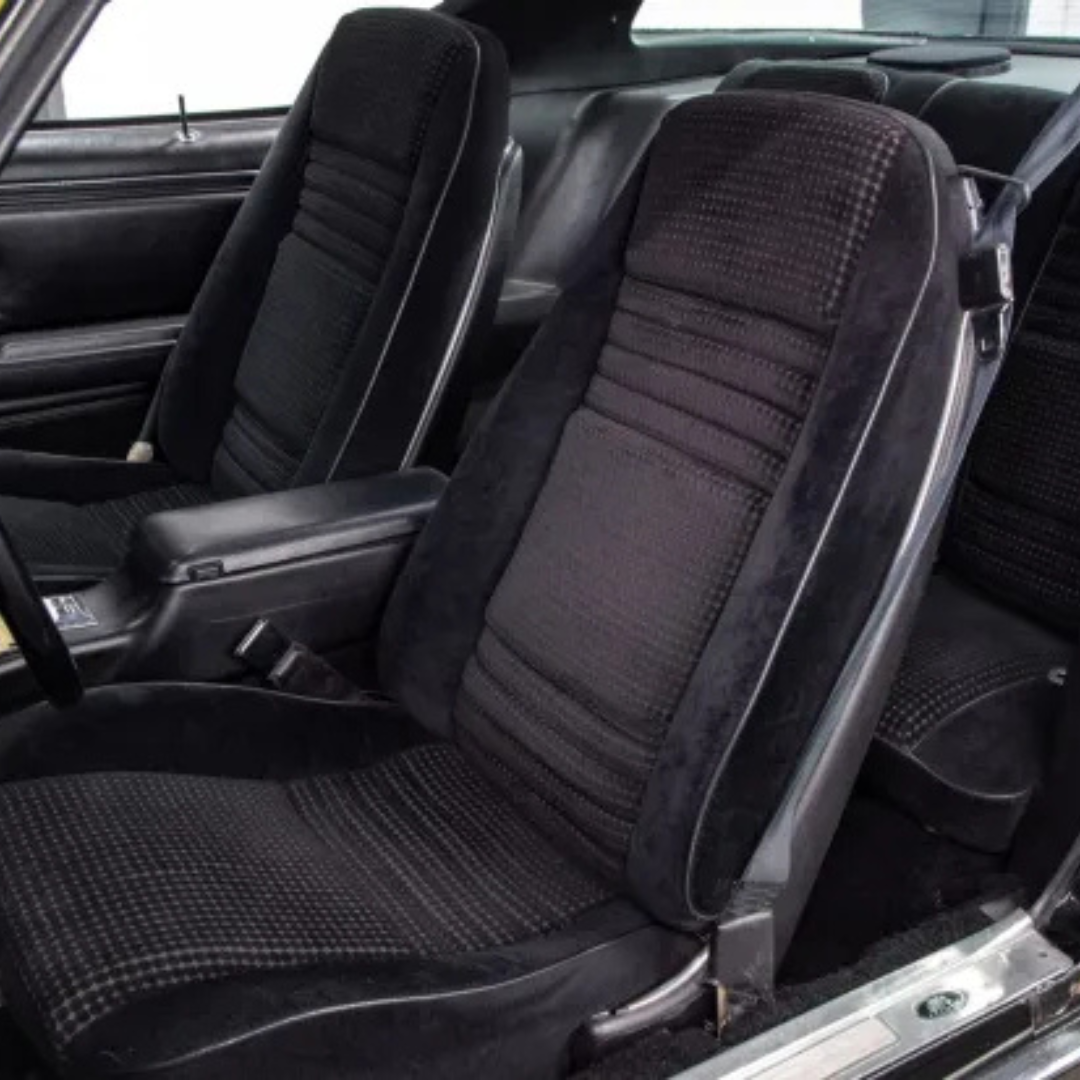
Every second-gen Trans Am received vinyl deluxe bucket seats as standard factory equipment. This was not an upgrade or a paid option. The deluxe buckets came with the car. Restoration guides or forum posts that describe these seats as an "upgrade" on a Trans Am are incorrect. If a base Firebird or Formula had the deluxe buckets, those were optioned in. On a Trans Am, they were the baseline.
The rest of the standard interior included:
- Color-keyed loop-pile carpeting
- Relatively flat door panels with minimal storage
- A center console on most years
- A full instrumentation cluster with tachometer
- Standard headliner and interior trim in matching colors
Interior color availability shifted across model years. Black was the most commonly ordered Trans Am interior by the late 1970s, but earlier years also offered Buckskin, White, Blue, and others depending on the year and the exterior color pairing. As Hemmings Motor News has documented in its coverage of the second-gen Firebird, the trim tag is consistently the most reliable way to confirm a specific car's factory interior configuration.
One thing the standard Trans Am interior never included: leather. Leather was not a standard or optional upgrade on second-gen Trans Ams with one narrow exception. The 1979 10th Anniversary Trans Am (RPO Y89) came with silver leather-trimmed seats as part of its exclusive Oyster interior package. That is the only second-gen Trans Am with factory leather. Every other car in the 1970 to 1981 production run had vinyl seating.
What the Custom (Deluxe) Interior Package Added
Pontiac offered an optional interior upgrade package across much of the second-gen production run. In period documentation and owner communities, this package is referred to as the Custom Interior or, informally, the Deluxe Interior. Both terms point to the same upgrade tier.
The difference from the standard interior was real but targeted. It focused on specific components rather than a wholesale interior replacement.
Door Panels
This is the most visible change between the two tiers. The custom interior door panels featured integrated storage pockets, a more layered construction, and additional padding compared to the standard flat panels. If you place two door panels from the same model year side by side, the difference is immediately obvious. This is also the fastest field identification method if you do not have documentation: look at the door panels.
Carpeting
Depending on the model year, the custom interior package upgraded from loop-pile to cut-pile carpet. Cut-pile has a denser, shorter, more finished appearance. The wrong carpet style is not a small error on a restored car; it reads as an uncorrected one.
Additional Trim Accents
The custom package included minor trim differences, which could involve upgraded headliner material in some years and additional interior accents. The specifics varied by model year, which is precisely why matching parts to a broadcast sheet matters more than relying on a general description.
What the upgrade did not change: the seats. The deluxe buckets were the same units in both the standard and custom interior configurations. Any claim that the custom interior included different seat construction should be verified against a factory broadcast sheet before being accepted.
A quick note on WS6 because it generates consistent confusion: WS6 was strictly a handling and performance package, covering suspension tuning, larger anti-roll bars, higher-rate springs, and upgraded wheel and tire specifications. It had no interior component. A Trans Am can have WS6 with a standard interior, a custom interior, or any other configuration. These choices were entirely independent of each other.
Special Interior Packages: Y84 and Y89
Two factory packages from the late second-gen run fall outside the standard-versus-deluxe framework and deserve specific attention.
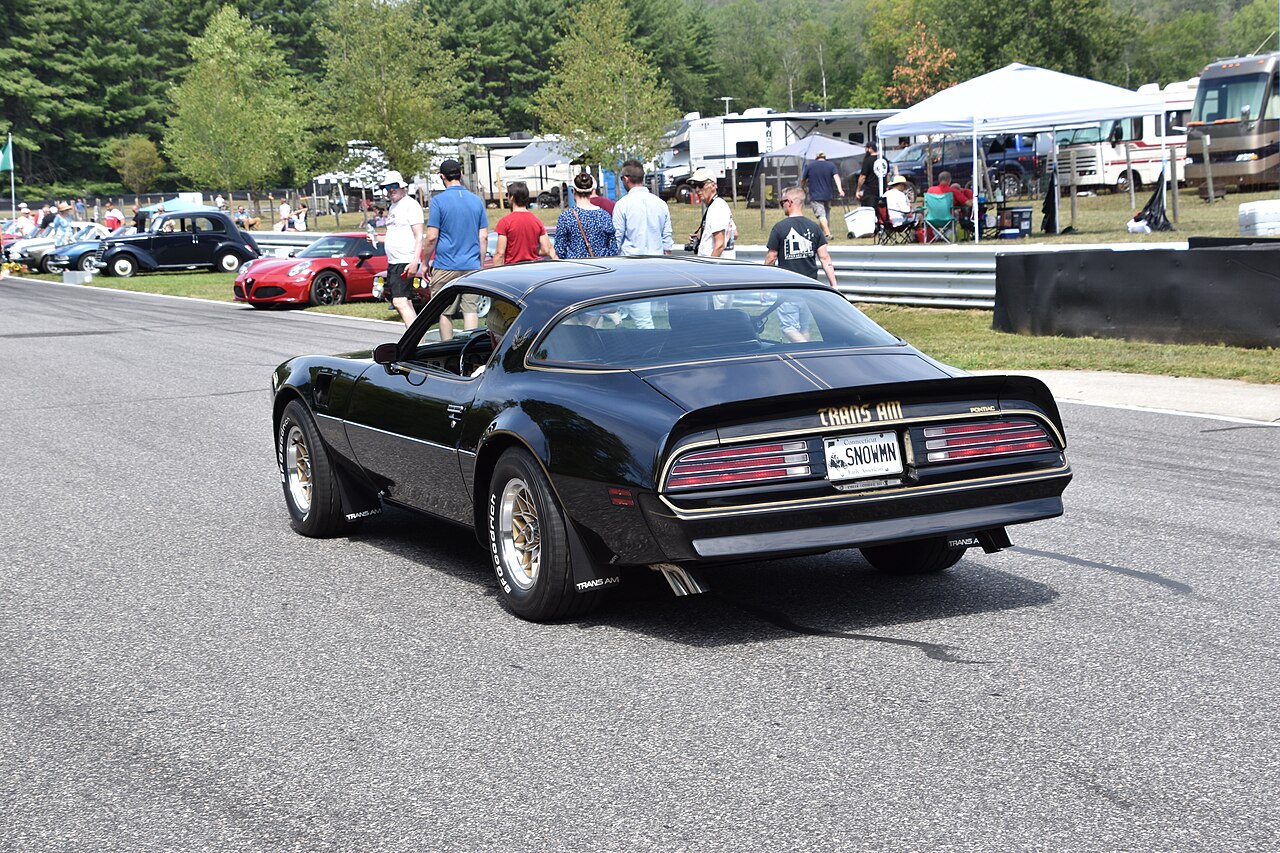
Y84 Special Edition (commonly called the Bandit package) paired a black and gold exterior with a specific black interior combination. The package was offered across several late second-gen model years. The Y84 interior was vinyl, consistent with every other second-gen Trans Am outside the Y89. One clarification that comes up regularly: the cars used in Smokey and the Bandit filming were specially constructed 1977 Trans Ams, not standard-production 1977 Trans Ams. Multiple vehicles were used during filming and they were not all built identically. A regular 1977 Trans Am is a similar car in many respects but is not a "Bandit car" in any documentary sense.
Y89 10th Anniversary is in a category entirely its own. The 1979 10th Anniversary Trans Am came with a Platinum Silver Metallic exterior, an Oyster-trimmed interior, and the only factory leather seats in the entire second-gen production run. The silver leather-trimmed deluxe buckets were paired with a unique instrument panel and distinctive interior detailing throughout. Pontiac built these in very limited numbers, and they remain among the most desirable cars in the second-gen lineup. Restoring a Y89 correctly requires locating silver leather-trimmed components or having the seats professionally recovered with correct materials. This is a fundamentally different restoration process from a standard vinyl interior job.
How to Identify Your Interior Package
Two documents tell you definitively what left the factory on your specific car.
The Fisher Body trim tag on the driver-side door jamb contains your interior trim code. This code identifies the color and material of the interior. Cross-referencing it against a factory assembly manual or a reproduction trim tag guide for your model year gives you a confirmed answer.
The broadcast sheet, when one survives, lists every factory-installed option by RPO code. These sheets are often found tucked under the carpet or behind door panels in their original position from assembly. If yours is intact, it is a primary source document. If it is missing, the trim tag is your next best reference.
Without either document, the door panels are your fastest visual indicator. Standard panels are flat. Custom or deluxe panels have integrated storage pockets and a noticeably more layered profile.
Sourcing the Right Interior Components
Getting the correct components matters for both authenticity and fitment. Door panels, carpet, and seat covers are not interchangeable between years or between trim levels. Installing custom-spec door panels in a standard-interior car, or loop-pile carpet in a car that originally had cut-pile, produces an interior that looks assembled from the wrong pile of parts.
When ordering seat covers, the vinyl grain pattern matters. The pattern changed across model years and does not transfer cleanly between them. Confirm the application year and your interior trim code before ordering. For carpet, confirm both the pile type and the correct color code.
The Bottom Line
The standard-versus-deluxe distinction on a second-gen Trans Am is mostly about the door panels and carpet, not the seats. Every Trans Am got the deluxe bucket seats as standard equipment, in vinyl, with the single exception of the 1979 Y89 and its silver leather. Before you buy a single interior part, confirm what your car actually left the factory with. Read the Fisher Body trim tag on the door jamb, find the broadcast sheet if it survived, and match your components to that specification by year and trim level. That is what keeps a restoration from looking assembled out of the wrong box of parts.