What year was Trans Am the fastest? It is a question that comes up constantly among second-gen enthusiasts, and it deserves a real answer rather than a vague nod toward the muscle car years. The 1970-1981 run spans the peak of factory performance, the worst of the emissions-era detuning, and a partial comeback before the generation closed out. That range produces wildly different cars, and raw horsepower ratings alone will mislead you if you do not account for how those numbers were measured.
The short answer is 1973, with the 455 Super Duty engine. Getting to that answer requires understanding why comparing specs across that twelve-year span takes some care.
The 1973 and 1974 SD-455: The Peak of Second-Gen Performance
The 455 Super Duty was Pontiac's engineering team doing the most they could inside a shrinking window. By 1972, federal emissions standards were tightening and the industry had switched from gross to net horsepower ratings, which made every car look slower on paper. Rather than accept the situation, Pontiac built something that could back up its spec sheet.
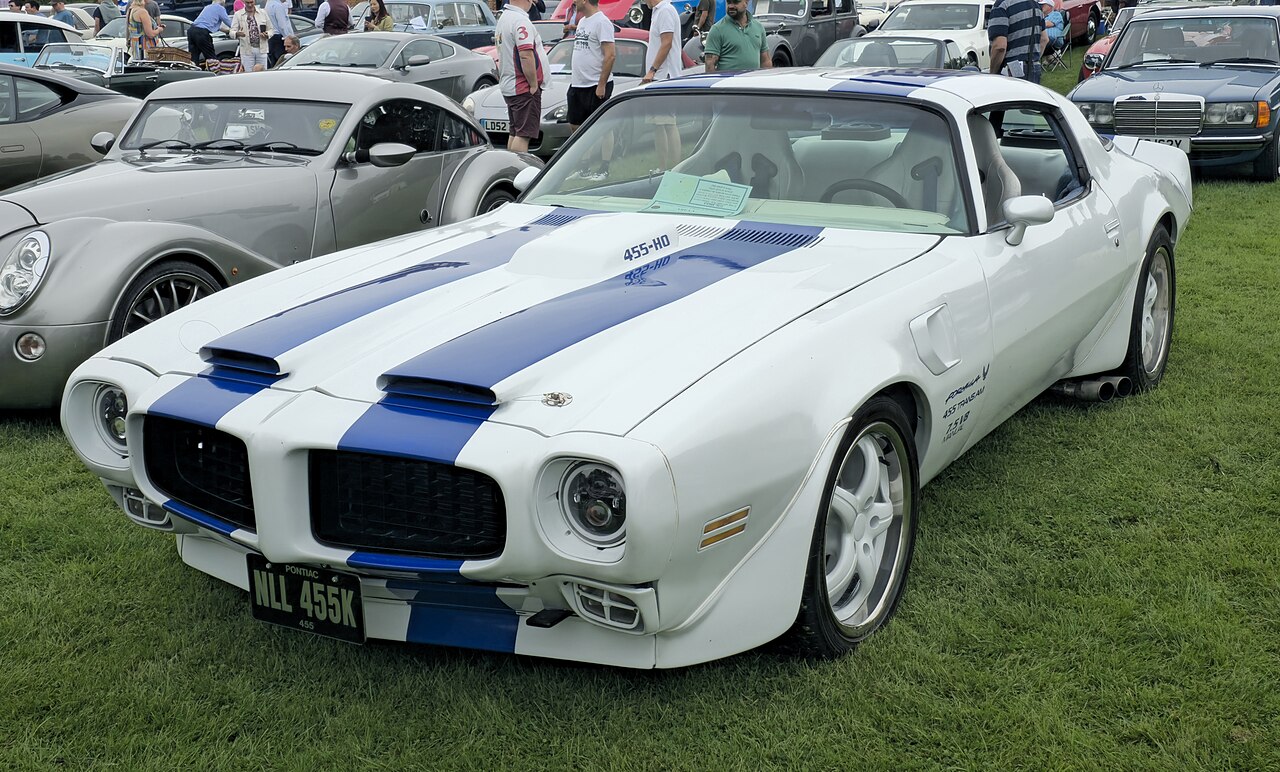
The SD-455 used four-bolt main bearing caps, round-port exhaust manifolds, forged internals, and a specific high-lift camshaft. It was not a detuned version of the regular 455. Pontiac rated it at 310 net horsepower and 455 lb-ft of torque for the 1973 model year.
Period testing confirmed those numbers held up in practice. Road tests by publications including Car and Driver placed the 1973 Trans Am SD-455 in the mid-13-second range in the quarter mile at approximately 104 mph. That was genuine muscle car performance, delivered at the exact moment most of Detroit had stopped trying.
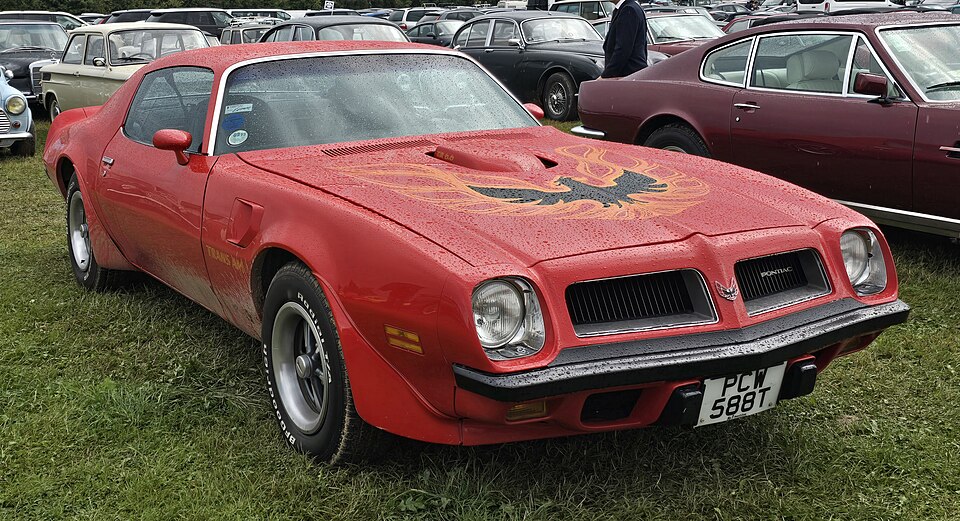
For 1974, the SD-455 was rated at 290 net horsepower. Real-world performance between the two years was close enough that a driver would not have felt the difference on the street. Both cars ran similar quarter-mile times and the torque characteristics were nearly identical.
Production of these cars was extremely limited. According to widely cited Pontiac production records, Pontiac built approximately 252 SD-455 Trans Ams for the 1973 model year and roughly 943 for 1974. A small number of Firebird Formulas received the engine each year as well. Emissions regulations ended the SD-455 program after 1974, giving it one of the shortest production runs of any significant Pontiac option.
If you are ranking second-gen Trans Ams by objective performance, 1973 sits at the top with 1974 right behind it.
The 1970 Trans Am: The Ram Air IV Argument
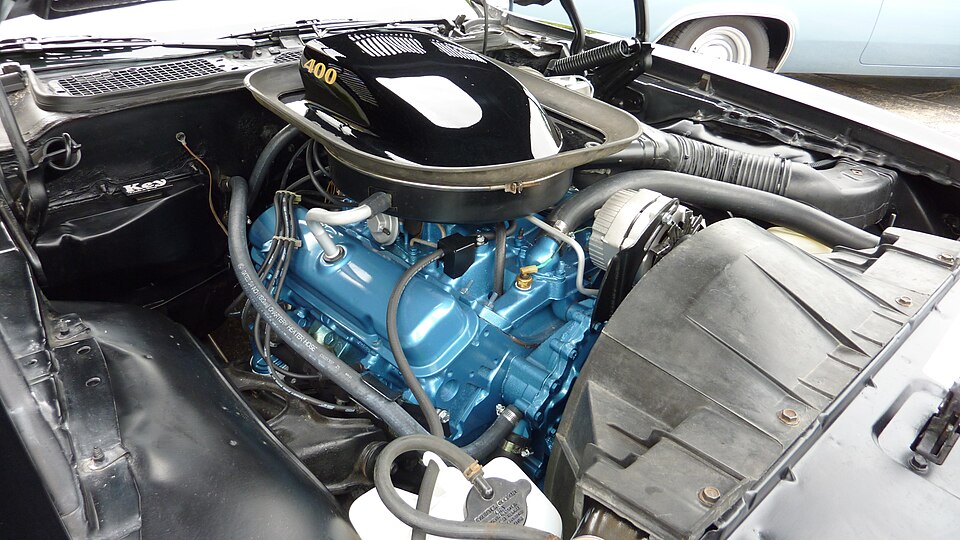
The other serious candidate for fastest second-gen Trans Am is the 1970 model, specifically with the Ram Air IV 400ci engine, which Pontiac rated at 345 gross horsepower.
The Ram Air IV argument runs into a fundamental measurement problem. Gross horsepower ratings, used through the 1971 model year, were taken with the engine on a test stand and stripped of most accessories. Net ratings reflect the engine installed in the vehicle with all accessories attached and the full exhaust system in place. When the industry switched to net ratings in 1972, most engines lost 20 to 30 percent of their official output overnight without actually getting slower. The Ram Air IV's real-world output in net terms was likely closer to 270 horsepower, putting it below the SD-455's 310 net hp on a level comparison.
Quarter-mile tests of 1970 Trans Ams with the Ram Air IV generally landed in the high 13s to low 14s. That was seriously quick for 1970, but it trails the SD-455's mid-13-second benchmark. The Ram Air III, the standard engine at 335 gross hp, ran a step slower still.
The 1970 Trans Am was a genuinely low-volume car. Total production came to approximately 3,196 units, all built on a compressed schedule after the second-gen body style was introduced. Every 1970 Trans Am came with either the Ram Air III or the Ram Air IV. There was no base 400 option without a Ram Air setup in the Trans Am that year. That combination of limited numbers and strong factory specifications makes 1970 one of the most collectible years in the second-gen run.
Why Performance Collapsed After 1974
The 1975 through 1977 Trans Ams are capable cars in several respects, but fast is not the right word for them. The standard 455ci, stripped of its Super Duty internals and tuned down to meet emissions requirements, was rated at 200 net horsepower in 1975 and 1976. The 400ci sat at 185 hp during the same period. These were large engines producing modest results.
The 455 was discontinued entirely after the 1976 model year. From 1977 forward, Trans Am buyers chose between the 400ci Pontiac engine and the optional 403ci Oldsmobile engine introduced that year. Neither produced anything approaching SD-455 output. The 403 was a reliable unit but it was not a performance engine, and the 400 in standard form was not far ahead of it.
Three factors drove this decline simultaneously. Federal emissions standards required lower compression ratios across the industry. The transition to unleaded fuel removed the octane that high-compression designs depended on. And corporate pressure throughout General Motors pushed manufacturers toward fuel economy ratings rather than dyno results. Pontiac's engineers were working with far fewer tools than they had in 1973.
The W72 Recovery: 1978 and 1979
By 1978, Pontiac had found some margin to push back. The W72 Performance Package, applied to the 400ci engine, included specific carburetor calibration, a higher-performance camshaft, and supporting hardware to extract more from the existing platform. The W72 400 was rated at 220 net horsepower in both 1978 and 1979.
The 1979 Trans Am with the W72 package was a meaningfully better driver's car than anything Pontiac had built since 1974. It sounded right, moved with purpose, and held together well in period road tests. But 220 hp is not 310 hp. The gap between the W72 cars and the SD-455 cars is real, and no amount of good driving impressions closes it.
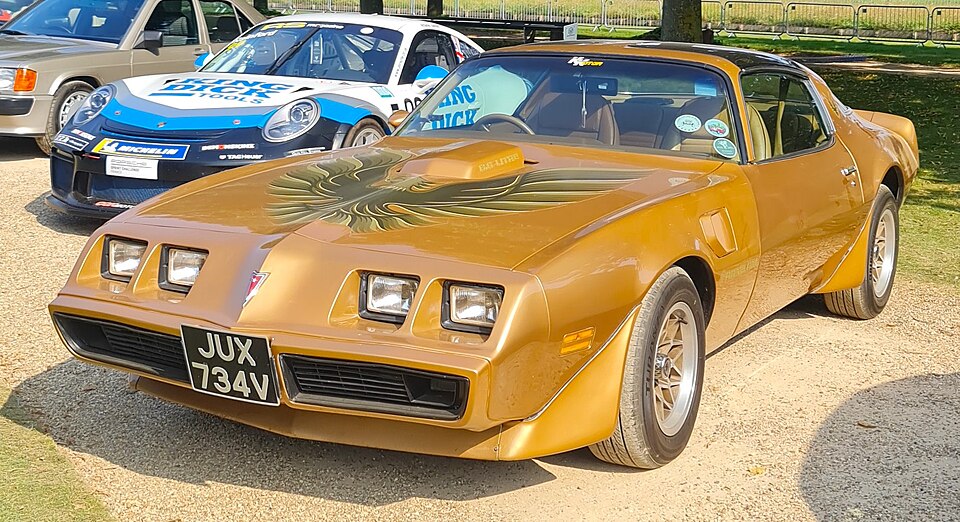
The 400ci was discontinued after 1979 due to continuing regulatory pressure. The 1980 and 1981 Trans Ams received the 301ci turbocharged engine, rated at 210 net horsepower in 1980 and 200 net hp in 1981. It was a creative engineering response to an increasingly difficult environment, but it did not restore the second generation to anything near its 1973 peak.
Reading Second-Gen Performance Numbers Across Eras
A few guidelines help when comparing Trans Am specifications across the full 1970-1981 span.
Gross horsepower ratings used through 1971 will always look higher than equivalent net ratings for the same actual output. Comparing 1970's 345 gross hp to 1974's 290 net hp without noting that distinction is not a fair comparison.
Quarter-mile times from period road tests are the most reliable tool available. They reflect actual vehicle performance under real conditions, regardless of what horsepower measurement system was current at the time.
Official horsepower ratings in the mid-1970s were sometimes stated conservatively for insurance and regulatory reasons. A few of those engines outperformed their published numbers on the dyno. That does not change the ranking at the top of the list, but it means some of the 1975-1977 cars were slightly better than their spec sheets suggested.
The conclusion stays the same regardless of which measuring tool you use. The 1973 Trans Am with the 455 Super Duty, rated at 310 net horsepower and tested in the mid-13-second range in the quarter mile, is the fastest second-generation Trans Am produced at the factory. It was fast by 1973 standards, fast relative to the 1970 cars when numbers are put on equal footing, and the clear benchmark for the entire 1970-1981 generation.