If you are asking how much does a 1979 Pontiac Firebird cost, the honest answer is that it depends heavily on which Firebird you mean. The 1979 model year was the peak of second-generation Firebird popularity. Pontiac built over 211,000 Firebirds that year, including roughly 117,000 Trans Ams, making 1979 the highest-volume year of the entire second-gen run. That production depth means you can still find these cars across a wide price range, from rough project-grade shells to fully sorted, documented examples that hold real collector value.
What a 1979 Pontiac Firebird Actually Costs Today
For a driver-quality 1979 base Firebird, expect to spend somewhere between $10,000 and $16,000. These are cars that run and drive, look presentable, and do not require immediate major work. Project cars with rust or incomplete drivetrains surface below $8,000, but factor in the cost of proper metalwork and mechanical restoration before deciding that is a deal.
Move up the trim ladder and prices climb accordingly. A solid Esprit sits in the $12,000 to $20,000 range depending on options and condition. The Formula, which carried a sportier suspension and more aggressive appearance without the full Trans Am treatment, typically trades between $18,000 and $30,000 for a clean example.
The Trans Am is where this market gets serious. A driver-condition Trans Am with matching numbers and correct documentation lands in the $22,000 to $35,000 range. A well-restored or excellent unrestored example with its original 400ci W72 T/A 6.6 engine and paperwork can push $45,000 to $55,000. The W72 matters because it was the performance engine of the lineup, a 400 cubic inch Pontiac V8 rated at approximately 220 horsepower that required premium fuel and was not available in California-registered cars. California buyers received the standard 403 cubic inch Oldsmobile engine instead. Finding a Trans Am with a matching W72, a Protect-O-Plate, and an original window sticker is increasingly difficult, and sellers know it.
Hagerty's collector car value guide tracks auction results and private sales across condition grades. Check it before you buy or sell, because the spread between a "fair" and "excellent" rated 1979 Trans Am can be $20,000 or more.
The Four Trims and How They Affect Resale
Pontiac offered four distinct Firebird models in 1979, and each has a different collector following today.
Base Firebird. The entry-level car used a 231 cubic inch Buick V6 as its standard powerplant, with the 301 cubic inch Pontiac V8 available as an option. These are the most affordable 1979 Firebirds to buy and the least sought after by collectors. A correct, low-mileage base car has its own appeal to buyers who want the shape without the Trans Am price.
Firebird Esprit. The Esprit was the comfort-oriented model with extra sound insulation and additional interior trim. It shares the base Firebird's general price profile in today's market but attracts buyers who want a usable second-gen without Trans Am running costs.
Firebird Formula. The Formula occupied the middle ground, sharing some of the Trans Am's suspension upgrades and V8 engine availability while wearing a cleaner exterior. Formulas are undervalued relative to Trans Ams by most measures, which makes them an interesting buy right now for anyone who actually drives their car.
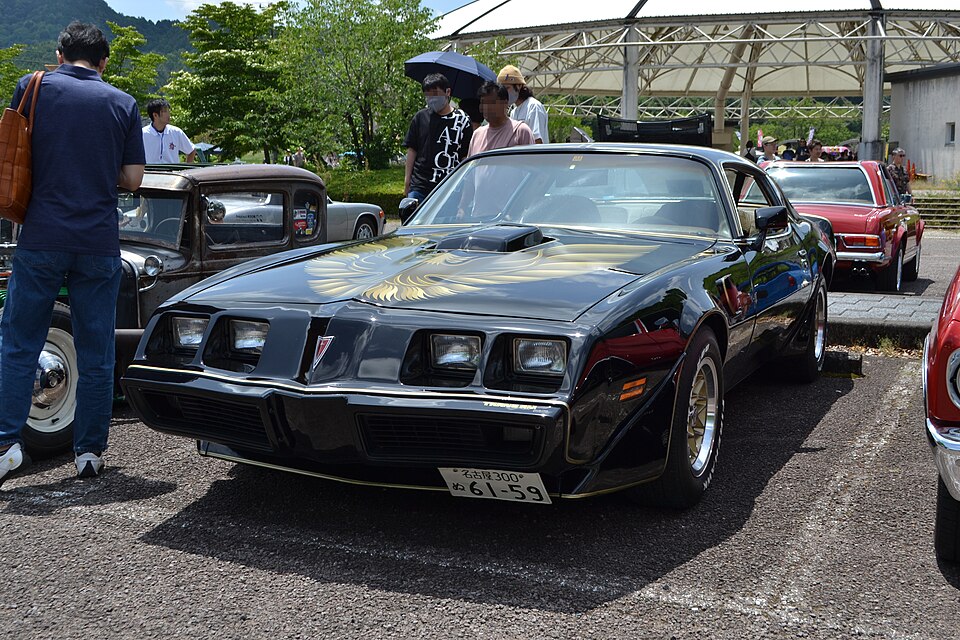
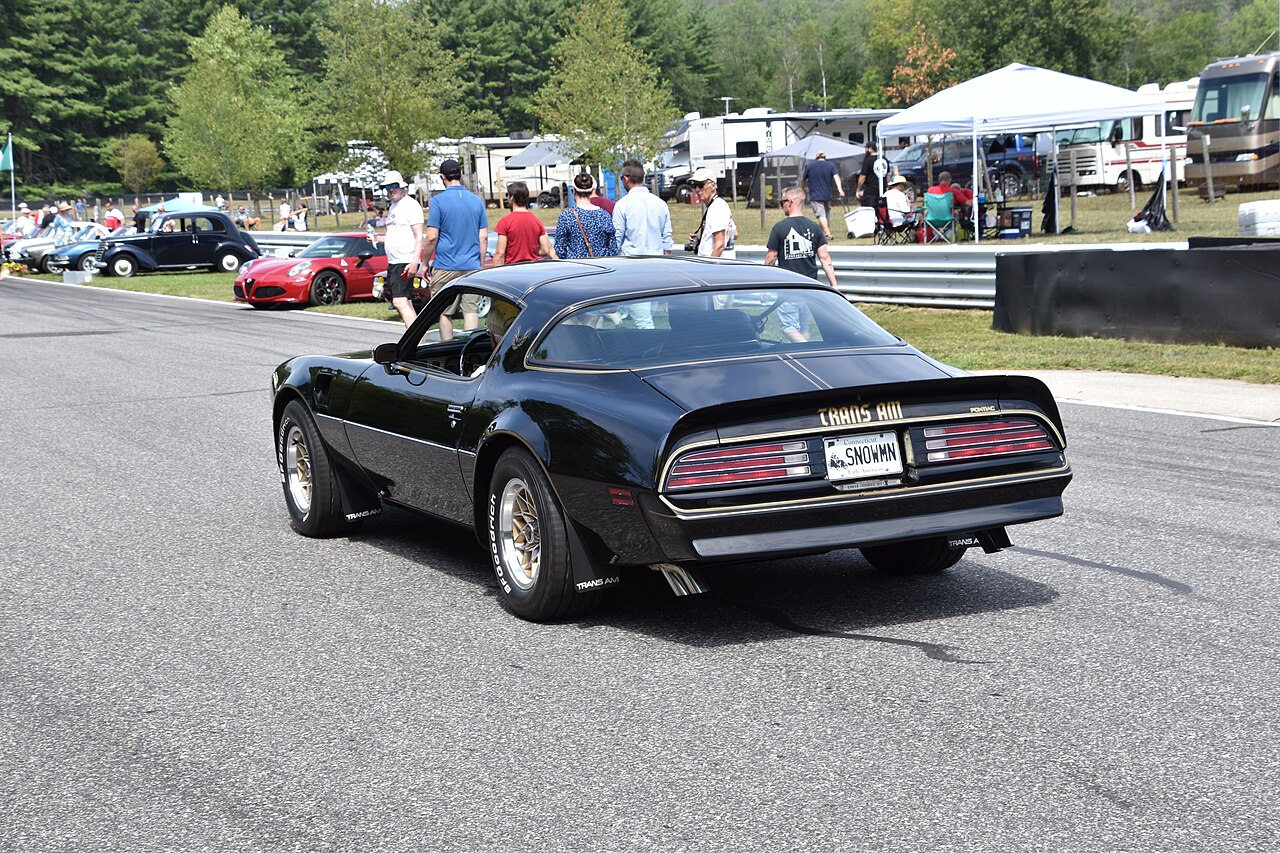
Trans Am. The standard 1979 Trans Am came with the 403 cubic inch Oldsmobile engine, the shaker hood scoop, front air dam, rear spoiler, and the distinctive large hood bird decal. The interior used Deluxe Bucket seats in vinyl, the standard Trans Am seating for 1978 through 1981. Options like the T-top roof, the W72 engine upgrade, and honeycomb wheels all increase desirability and value today.
The 10th Anniversary Trans Am: A Category of Its Own
The 1979 10th Anniversary Trans Am, ordered under RPO Y89, is the standout of the entire second-generation lineup in terms of collectibility. Approximately 7,500 were built, all finished in Platinum Silver Metallic with two-tone silver and charcoal accent striping. Every one came equipped with the 400 cubic inch W72 T/A 6.6 engine, Hurst Hatch T-tops, and silver leather-trimmed bucket seats.
That last detail matters significantly. The 10th Anniversary Trans Am is the only second-generation Firebird or Trans Am that left the factory with leather seats. Every other second-gen model, including every standard Trans Am, Formula, Esprit, and base Firebird, used vinyl seating surfaces. If someone is trying to sell you a "factory leather" 1979 Trans Am that is not a verified Y89, those seats are either aftermarket or recovered.
Current market values for documented 10th Anniversary Trans Ams in driver condition start around $40,000 and move up quickly. Excellent, well-documented examples have sold in the $65,000 to $85,000 range, and low-mileage originals push higher. The combination of limited production, distinctive appearance, unique leather interior, and the standard W72 drivetrain has made these genuine blue-chip collectibles within the second-gen world.
What Pushes the Price Up or Down
Condition is obvious, but the specific factors that move a 1979 Firebird's price the most are worth spelling out.
Numbers matching drivetrain. On a Trans Am, this means the engine block's partial VIN stamp matching the car's VIN, combined with correct-date-coded ancillary components. A matching-numbers W72 car is worth meaningfully more than a Trans Am with a replaced or swapped engine.
Original documentation. Window stickers, Protect-O-Plate cards, and factory build sheets are increasingly rare. Any of these traveling with the car is a legitimate and defensible value add.
T-top versus solid roof. T-tops were popular and remain desirable today, but they introduced leak and body-flex issues. Solid-roof cars are structurally stiffer. The market leans toward T-top cars in general, though some buyers specifically seek out solid-roof examples.
Rust. The second-gen Firebird body has specific trouble spots: the lower rear quarters behind the wheel openings, the floor pans under the seats, and the torque boxes at the front subframe. A car that is solid in all three areas commands a real premium over one that needs metalwork.
Paint and exterior originality. A car wearing its original factory paint code, even worn, is more desirable to serious collectors than a fresh respray in a non-original color. Faded but original paint can be evaluated; a repaint hides the story.
Insuring a 1979 Firebird at Its Real Value
Standard auto insurance treats a 1979 Firebird like any other used vehicle. That means if the car is totaled, the insurer pays what they determine the car is worth at that moment, which is often well below what you paid or what you would spend to replace it. For a collectible worth $20,000 or more, that gap is real money out of your pocket.
Agreed-value policies solve this directly. You and the insurer agree on the car's value when the policy is written, and that agreed amount is what gets paid in a total loss, with no depreciation deducted. Hagerty and American Collectors Insurance both specialize in this type of coverage for collector vehicles.
Before you apply, get a professional appraisal or at minimum document the car thoroughly with photos, records, and comparable recent sales. The stronger your documentation, the easier it is to establish and defend the agreed value.